
Last updated November 22, 2026
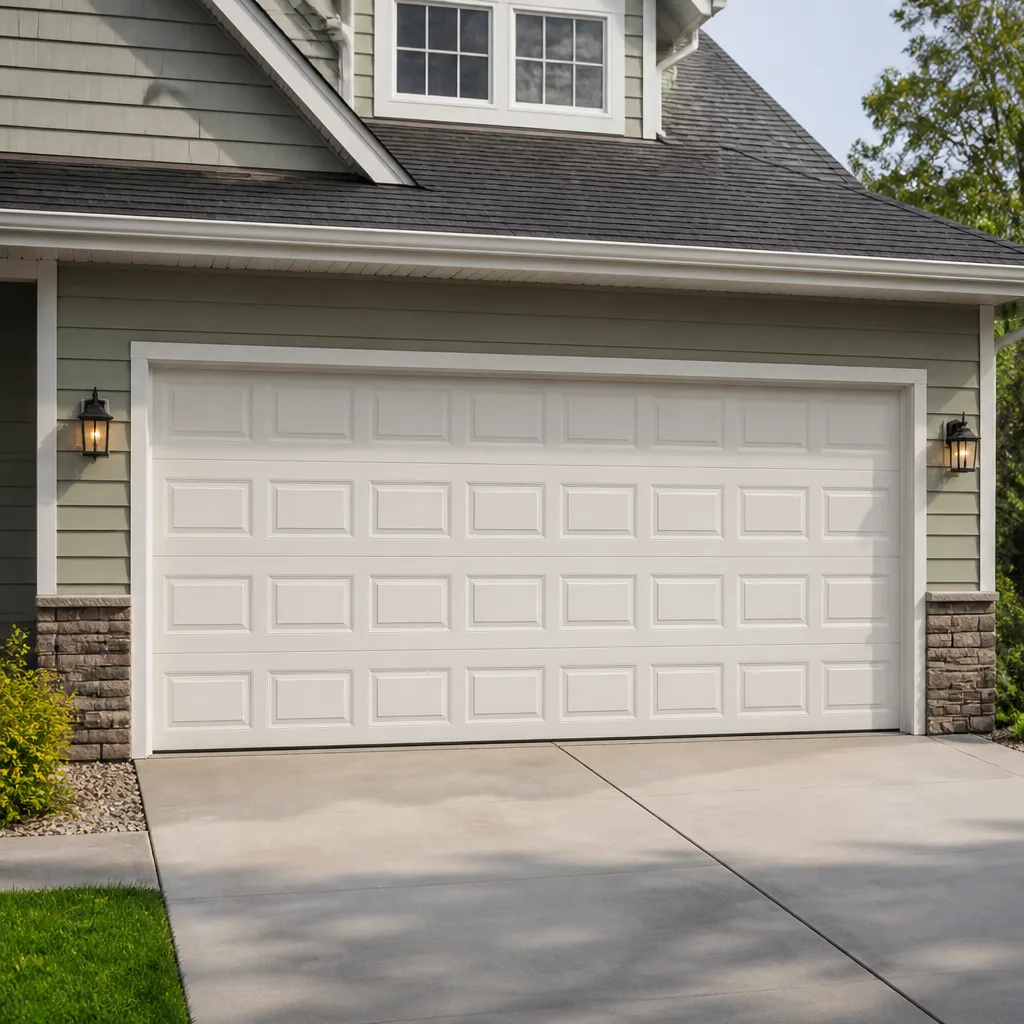 Raised-panel steel
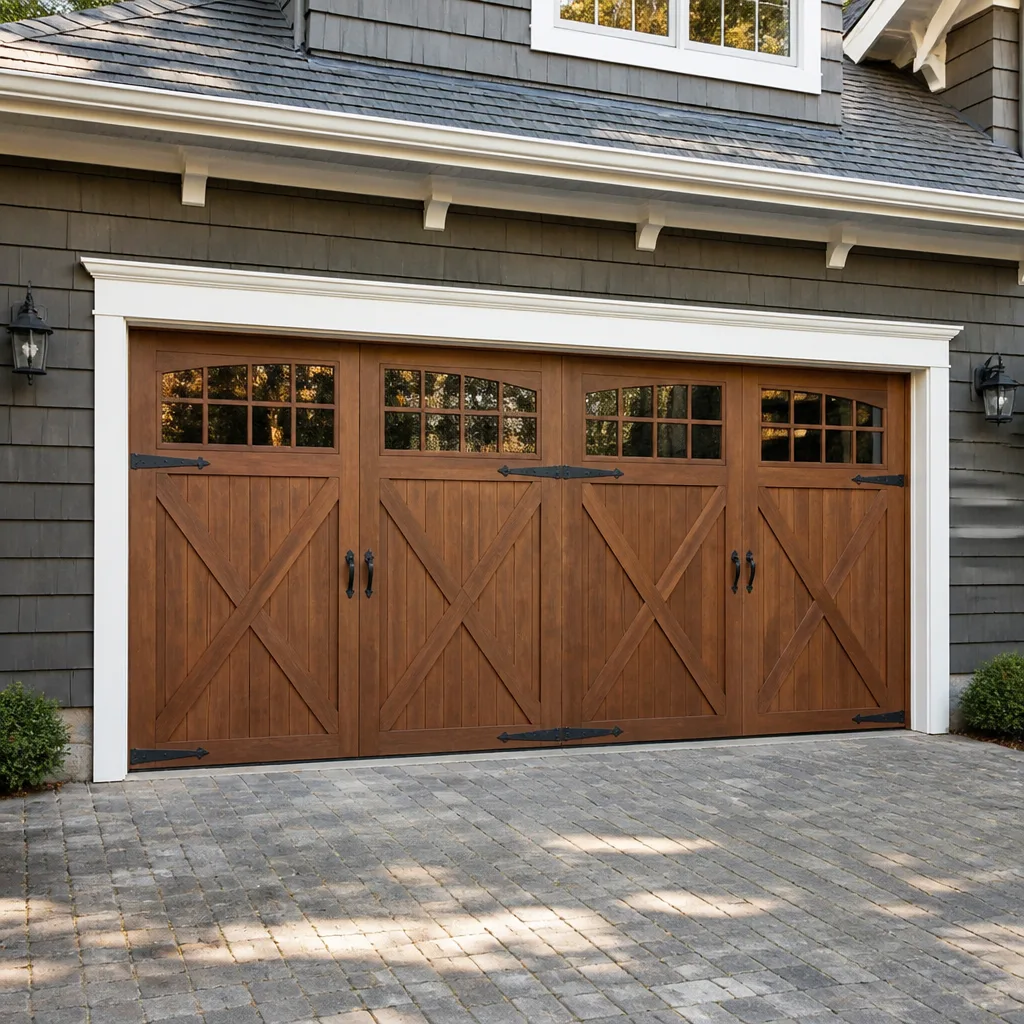 Carriage house
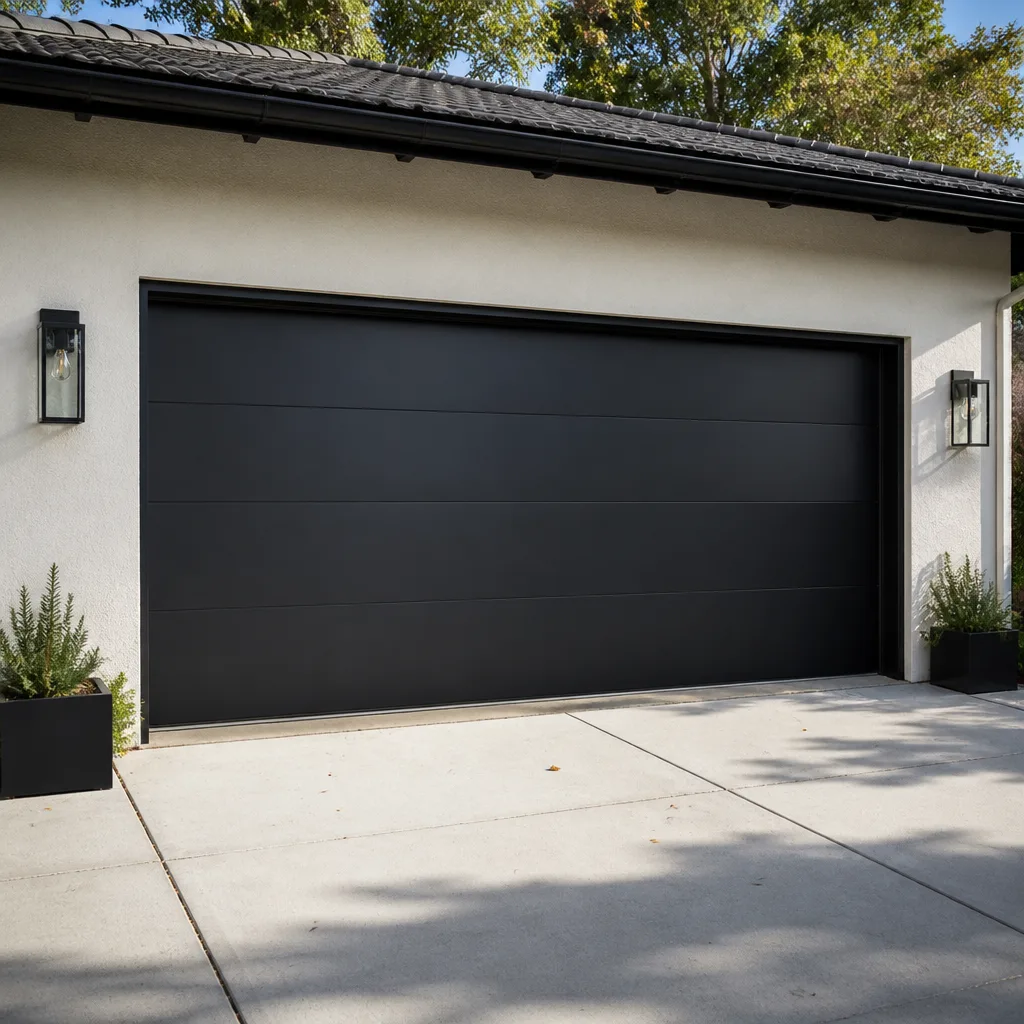 Modern flush
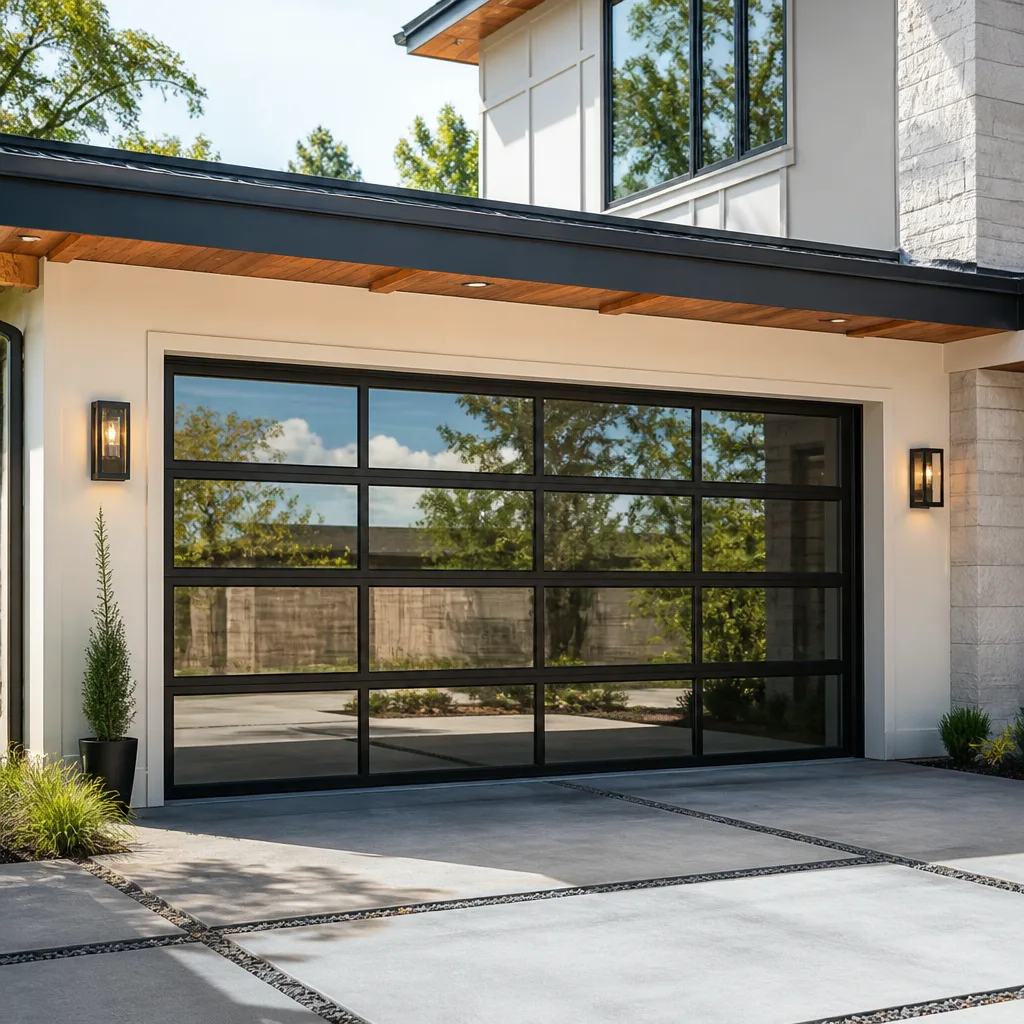 Full-view glass
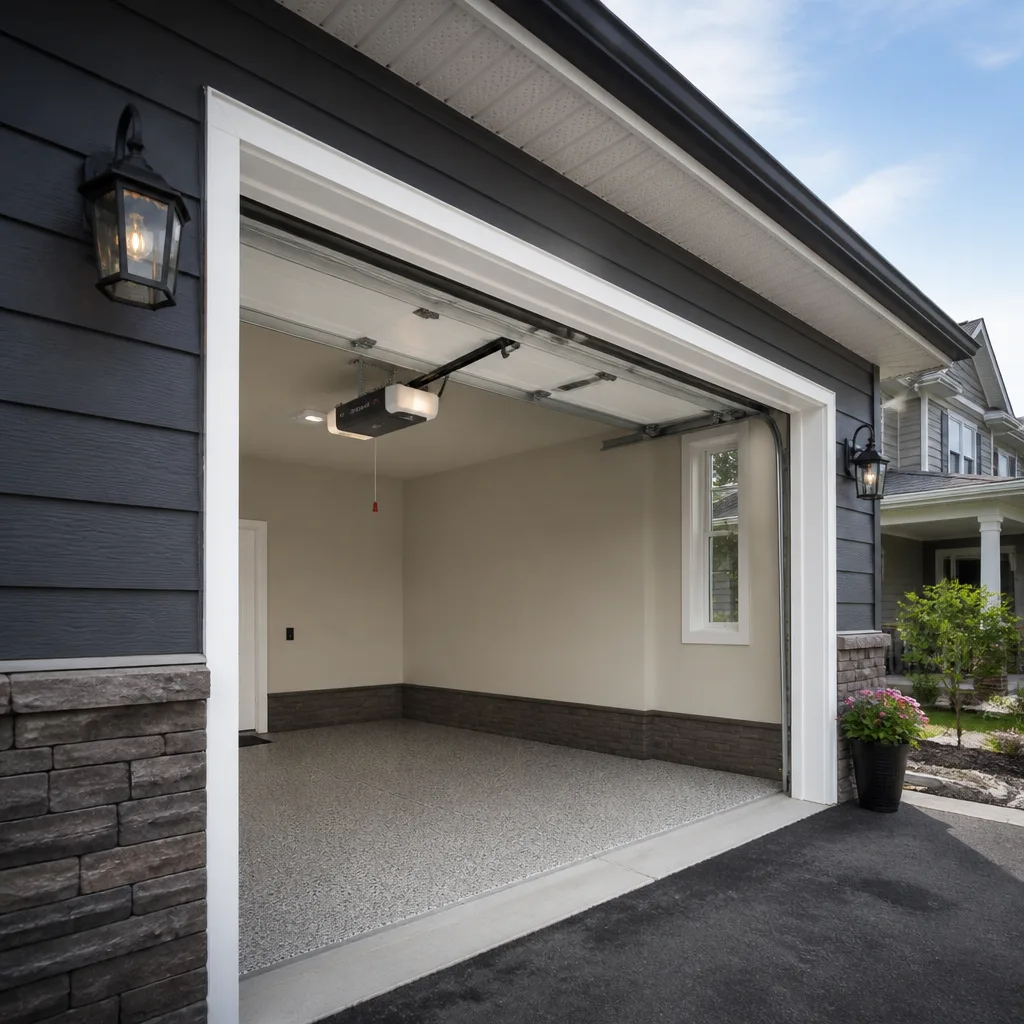 LiftMaster openers
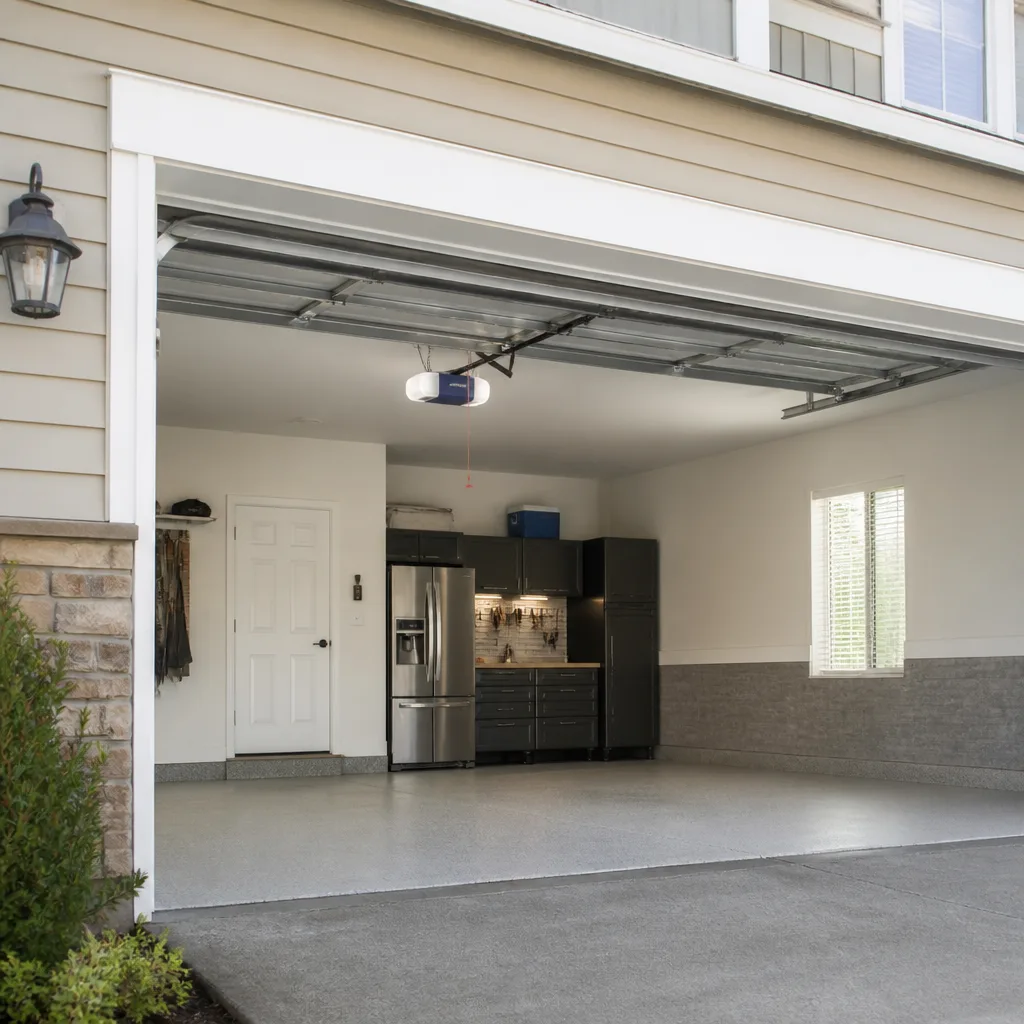 Chamberlain openers
Full 25-point door and opener safety check with every visit - springs, cables, rollers, tracks, and your LiftMaster or Chamberlain opener included
You get a price before we start. It does not change when the pro arrives.
Get your free estimateHow to Hire a Garage Door Contractor in White Plains: A Step-by-Step Guide
The most common complaint filed against garage door companies in New York isn’t shoddy work. It’s parts replaced unnecessarily because the technician couldn’t pinpoint the actual failure. A torsion spring gets swapped when the real culprit was a binding track. An opener gets condemned when the travel limit was simply out of adjustment. The homeowner pays for both, then finds out the original part was never the problem.
Hiring well in White Plains means filtering for diagnosis, not volume. This guide walks through what New York actually requires of garage door contractors, the questions that separate specialists from generalists, the local red flags worth watching for, and how to read a repair estimate line by line so padding doesn’t survive the review.
Quick Answer
To hire a garage door contractor in White Plains, verify the company can name your door and opener brands, ask who actually performs the work, and get a written estimate with parts and labor itemized before anyone touches the door. A contractor who diagnoses before quoting and puts the price in writing is the one to book. A dispatcher who quotes a spring replacement over the phone without seeing the door is not.
Styles & brands we work with
- Raised-panel steel
- Carriage house
- Modern flush
- Full-view glass
- LiftMaster openers
- Chamberlain openers
Table of Contents
- What New York Actually Requires of Garage Door Contractors
- The Five Questions That Reveal Specialists From Generalists
- White Plains Red Flags: Local-Sounding Names, No Verifiable Address
- How to Read a Repair Estimate Line by Line
- Why a Second Opinion on Spring and Opener Replacements Pays Off
- Emergency Repair vs. Scheduled Work: Different Standards
- Why Brand Familiarity Changes the Diagnosis
- Hiring for a New Door Installation
What New York Actually Requires of Garage Door Contractors
New York State does not issue a single statewide garage door contractor license. That’s the fact most homeowners never hear, and it’s the one that matters most when you’re comparing companies in White Plains. Home improvement contracting in New York is regulated at the county level, and Westchester County requires home improvement contractors to hold a county home improvement license. A company working in White Plains should be able to show that Westchester County credential, plus liability insurance and workers’ compensation coverage.
What this means in practice: a website that says “licensed and insured” is telling you almost nothing on its own, because the phrase isn’t tied to one state-issued number you can look up in a single database. You have to ask which license, issued by which county, and then verify it.
What to verify before you book
- The county license. Ask for the Westchester County home improvement license number and confirm it’s active. A company working regularly in White Plains should have this without hesitation.
- Liability insurance. Ask for a certificate of insurance and check the coverage is current. If a door panel comes down wrong, you want that coverage in place before the work starts, not after.
- Workers’ compensation. If someone is injured on your property and the company doesn’t carry it, the exposure can land on you.
- Who is actually coming. Ask whether the technicians are employees of the company you’re calling or subcontractors pulled from a network.
We connect White Plains homeowners with independent local professionals who are licensed and insured as their state and county require, and we’ll tell you plainly which credential applies to the job. If a company bristles at the license question, that reaction is your answer. For a closer look at how a properly run garage door repair visit should go, the diagnostic steps are the same whether the door is stuck open or just noisy.
The Five Questions That Reveal Specialists From Generalists
You can tell within about three minutes of conversation whether you’re talking to a garage door specialist or a volume-first dispatch operation. The difference isn’t in the sales pitch. It’s in whether the person on the phone can talk about your specific equipment without looking anything up.
- “What brand is my door and opener?” A specialist asks this early. If you don’t know, they’ll ask what the door looks like, how old the opener is, and whether the remote says LiftMaster, Chamberlain, Genie, or something else. A generalist skips the question and quotes a flat repair price.
- “Who diagnoses the problem, and who does the repair?” The best answer is that the same technician does both. The worst is that a “diagnostic visit” is separate from the “repair visit,” which is how unnecessary part replacements get justified.
- “Can you tell me what a torsion spring replacement involves?” A specialist will describe the winding process, the matched-pair question, and the tension risk in plain terms. A generalist will say “we handle springs” and change the subject.
- “Do you work on my opener’s specific system?” Smart-home-connected openers, older screw-drive units, and legacy chain-drive systems all diagnose differently. A company that knows Chamberlain and Genie systems will ask which one you have before quoting.
- “What’s the price, and is it in writing before work starts?” A specialist quotes per job, in writing, after seeing the door. A volume operation quotes a range over the phone and then “discovers” additional problems on site.
These five questions cost you nothing and eliminate most of the White Plains market in one call. The companies that answer all five clearly are the ones worth scheduling. On the spring question specifically, our garage door spring repair page walks through what a proper spring job includes, and it’s worth reading before you call anyone.
White Plains Red Flags: Local-Sounding Names, No Verifiable Address
White Plains sits at the center of the county’s commuter belt, which makes it a target market. Out-of-area companies know the city name sells, so they build websites around it, buy the search results, and dispatch whoever is nearest. The name on the website and the company doing the work are sometimes only loosely related.
How to spot a company that isn’t what it claims
- No verifiable address. A company presenting itself as a White Plains business should have a real physical address you can find independently. If the “address” is a mailbox service or resolves to a strip mall in another county, ask why.
- The phone is answered by a national call center. Ask the person who answers to describe the weather outside. If they can’t, you’re talking to a dispatcher three states away, and the technician who shows up won’t know the local building department or the local housing stock either.
- Quotes given before diagnosis. A spring price quoted over the phone without anyone seeing the door is a sales number, not a repair estimate. Doors vary too much for that to be honest.
- Pressure to approve work on the spot. Reputable contractors will tell you what they found, what it costs, and give you time to decide. If the tech won’t leave without a signature, the diagnosis is suspect.
- Parts not matching the diagnosis. If the technician recommends a new opener without testing the safety sensors, travel limits, and force settings, that’s a red flag. Those three checks solve a large share of “the opener is dying” calls.
White Plains neighborhoods like Gedney Farms, Highlands, and North Broadway have a mix of older homes with original doors and newer builds with modern insulated panels. A local technician has seen both and knows which parts fail in which housing stock. An out-of-area crew sees whatever is on the ticket. For a sense of what a local repair operation looks like up close, it helps to know the garage door repair White Plains standard, which starts with diagnosis before pricing every time.
How to Read a Repair Estimate Line by Line
Most homeowners glance at the bottom number and approve. The padding hides in the middle. A written estimate should tell you exactly what’s being replaced, what brand and type of part is going in, and what the labor covers. If any of those are vague, ask for them in writing before you approve.
What each line should actually say
- Parts, named specifically. “Spring” is not enough. It should say the type (torsion or extension), the size and rating, and the brand if it’s a branded component. A Clopay panel isn’t interchangeable with a generic one, and the estimate should reflect that.
- Matched pairs handled honestly. Springs usually fail as a set. A quote for one spring on a door with two is a quote for a callback. The estimate should say clearly whether it’s one spring or a pair, and price accordingly.
- Labor, described. Labor should cover the removal, installation, tensioning, balancing, and a safety check of the door’s operation. If it just says “labor,” ask what’s included. A job that doesn’t end with a balance and safety test isn’t finished.
- Hardware and adjustments. Hinges, rollers, cables, and track adjustments are small line items that add up. Legitimate ones are listed individually. A single “hardware kit” line with a large number is a place to ask questions.
- The total, tied to the written scope. The written estimate sets the price. If the technician finds a genuine additional problem, that should come to you as a revised written estimate before it’s done, not as a surprise on the invoice.
Common padding to watch for: a “tune-up” line added to every job whether or not the door needed it, an opener replacement recommended for what turns out to be a $20 limit adjustment, and springs quoted at a premium without a stated size or rating. None of these are hard to catch once you know the line items to look for. If a company can name the parts and the reason, they can put it in writing.
Why a Second Opinion on Spring and Opener Replacements Pays Off
Not every repair deserves a second opinion. A snapped cable, a dented panel, a stripped hinge: those are visible and unambiguous. Springs and openers are different. Both are commonly misdiagnosed, and both are expensive enough that a second look is worth the phone call.
With springs, the failure is often real, but the diagnosis of which spring and why matters. A door that’s been out of balance for months will wear springs unevenly, and a technician who replaces the spring without checking the balance is setting up the next failure. With openers, the failure is frequently not the opener at all. Safety sensors knocked out of alignment, a travel limit drifted out of position, a gear worn down inside the motor housing, or a remote that simply lost its programming will all present as “the opener is dying.” A specialist runs those checks first. A volume operation replaces the unit and calls it solved.
When a second opinion is worth it
- The spring quote came without a size or type. Ask a second company what spring the door needs and why. The answer should be specific.
- The opener was condemned without a sensor or limit test. Any reputable technician will test those before recommending replacement. If they didn’t, get another look.
- The estimate is well above what the job typically involves. Spring repairs and opener repairs have normal ranges. A quote far outside them warrants a second written estimate before you commit.
- The company can’t explain the failure. If the tech can’t tell you what broke and why, they don’t know. And if they don’t know, they’re guessing at your expense.
A second opinion takes one phone call and often reveals the real problem is smaller and cheaper than the first quote suggested. Our team handles opener work across Chamberlain, Genie, LiftMaster, and Craftsman systems, and the garage door opener repair page covers the diagnostics we run before recommending any replacement.
Emergency Repair vs. Scheduled Work: Different Standards
A door that’s stuck open and a door that needs a new panel are two different hiring decisions, and they should be judged differently. Emergency work is about speed and competence under pressure. Scheduled work is about measurement, options, and getting the installation right the first time.
For emergency calls, the questions center on availability and capability, not just availability. Can the company answer the phone on a Sunday and get a technician out the same day? Do those technicians carry the parts for a spring or cable break, or will they be diagnosing on a door they can’t fix until the next visit? A door stuck open on a White Plains home is a security question as much as a convenience one, and same-day service is the difference between a solved problem and a night of waiting. We answer 24/7 and fast dispatch runs from 7am to 7pm, Sunday through Friday, closed Saturday. That’s a real operational fact, not a marketing line.
For scheduled work, the standards are different. New installation, panel replacement, and opener upgrades involve measuring, ordering, and scheduling. The right question is not “can you come today” but “will you measure and quote in writing before I commit.” A free measure and a written price, with the parts named, is the correct sequence for any garage door repair that involves significant replacement work. Never accept a same-day promise on installation work that hasn’t been measured.
Which is which
- Emergency: broken spring, snapped cable, door stuck open or closed, door off its track, opener failure trapping the car. These need same-day attention.
- Scheduled: new door installation, panel replacement, opener upgrade, weather seal replacement, and any job requiring ordered parts.
Why Brand Familiarity Changes the Diagnosis
A garage door is a system, and the components within it aren’t interchangeable across brands. A Clopay door has specific panel profiles, hinge placements, and spring recommendations that differ from an Amarr door of similar size. An opener built by Chamberlain and one built by Genie use different logic boards, limit settings, and remote programming sequences. A technician who doesn’t know the brand is diagnosing by trial and error, and the homeowner pays for each wrong guess.
In practice, brand familiarity saves both time and parts. An opener that won’t close might be a sun-struck safety sensor on a Chamberlain system, a travel limit on a Genie, or a worn gear inside an older Craftsman unit. A technician who works across these brands regularly can identify the failure quickly and fix the actual cause. A generalist will start replacing the most expensive component first and work down.
What to ask about brand knowledge
- “Which brands do you work on regularly?” The answer should name specific manufacturers, not say “all brands.”
- “What would you check first on my opener?” The answer should mention the sensors and the travel limits, not the motor.
- “Can you tell me the size of spring my door uses?” If they can, they know doors. If they can’t, they’ll measure on site, which is fine, but they should know what they’re measuring.
Our technicians work regularly on LiftMaster, Chamberlain, Genie, Clopay, Amarr, Wayne Dalton, Craftsman, and Raynor products. That means the diagnosis starts from a known platform, not from scratch. It’s the difference between a repair and an experiment.
Hiring for a New Door Installation
Installation is the one garage door job where the hiring decision has the longest consequences. A poorly installed door binds, wears springs early, and never quite seals. The right questions are different from a repair call, and they center on measurement, options, and the written scope.
- Get a real measure, not an estimate from a photo. Every door installation needs an in-person measure of the opening, the headroom, and the side clearance. A company that quotes from photos is quoting a guess.
- Ask what the door is made of and why it suits your home. Steel, aluminum, wood, and insulated composite all have different weights and different maintenance needs. The recommendation should be based on how you use the door and the housing stock, not on what’s in stock.
- Confirm what the written estimate includes. Installation, removal of the old door, track and hardware, opener compatibility, and haul-away should all be named. If haul-away isn’t listed, ask who’s taking the old door.
- Ask about the opener. If you’re keeping the existing opener, it should be checked for compatibility with the new door’s weight. If you’re replacing it, the estimate should name the brand and the type (belt, chain, screw-drive, or smart-home-connected).
- Get the final price in writing before scheduling. Installation prices don’t change after the measure unless the scope changes. The written estimate sets the final price.
White Plains homes range from original mid-century doors on Gedney Farms properties to modern insulated panels on newer builds in the Highlands. An installer who knows that range will recommend on the basis of what the house actually needs, not what’s easiest to deliver. For homeowners comparing options, a proper installation visit starts with the same free measure that any repair visit starts with: an inspection of the door, the opening, and the opener before a price is quoted. The written estimate is the number, and no work starts until it’s signed.
Common Mistakes to Avoid
- Booking from a phone quote alone. A spring replacement quoted over the phone without anyone seeing the door is a sales number, not an estimate. Ask for the written estimate after a real diagnosis.
- Skipping the license question. A website that says “licensed and insured” isn’t verification. Ask for the Westchester County license and confirm the coverage is current.
- Accepting a single spring when the door has two. Springs fail as a set, and replacing one on a matched pair is a callback waiting to happen. The estimate should say clearly which it is and price it accordingly.
- Letting an opener be replaced without a sensor and limit check. A large share of “the opener is dead” calls is a sensor or limit issue. Any reputable technician tests those first, and if yours didn’t, ask why.
- Choosing a company based on its White Plains name alone. Out-of-area companies use local-sounding names and dispatch generalists. Verify the address and ask who’s actually coming.
- Approving work without a written scope. The written estimate is what protects you if the found problem turns out to be bigger than expected. Work outside the scope should come back to you as a revised estimate, not an invoice.
- Judging installation work by scheduling speed. New doors need measure and order time. A company that promises same-day installation over the phone is skipping the measurement, and that’s where installation problems start.
See the difference
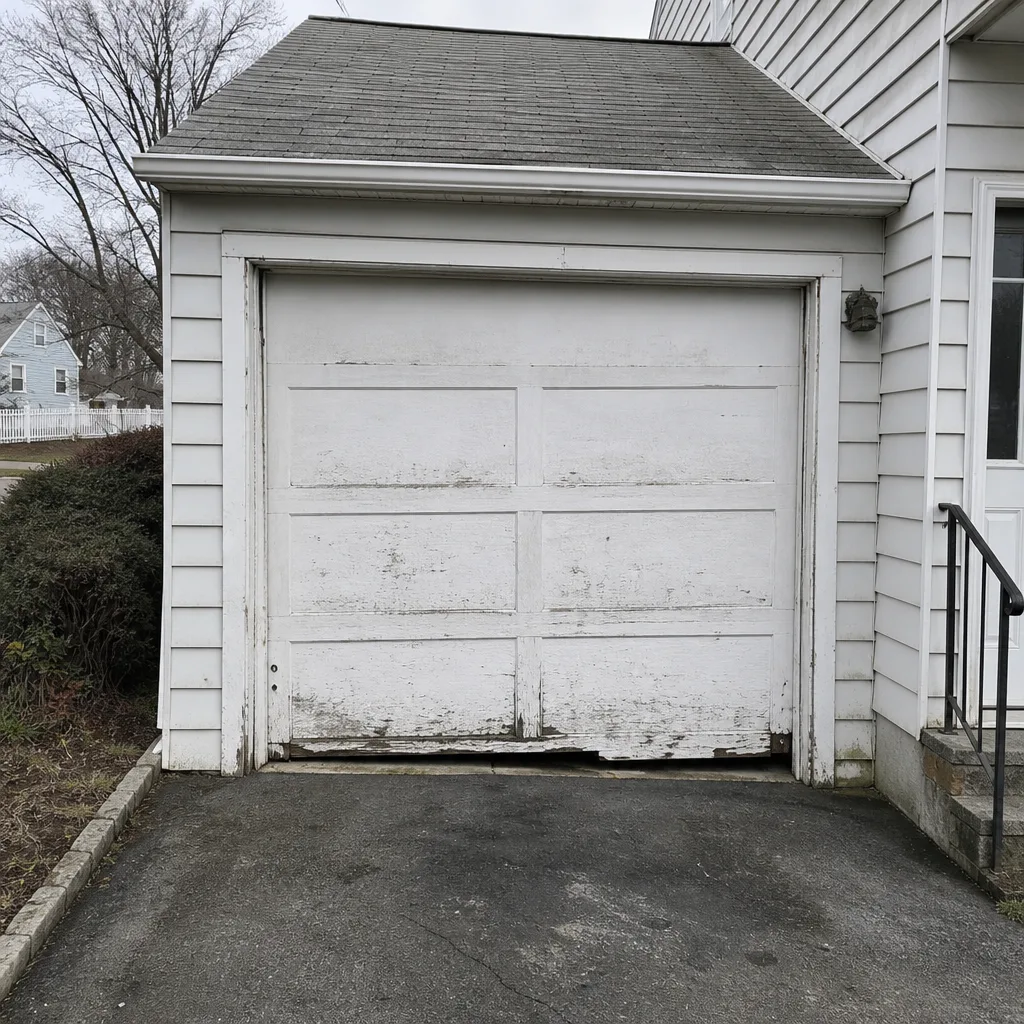 Before
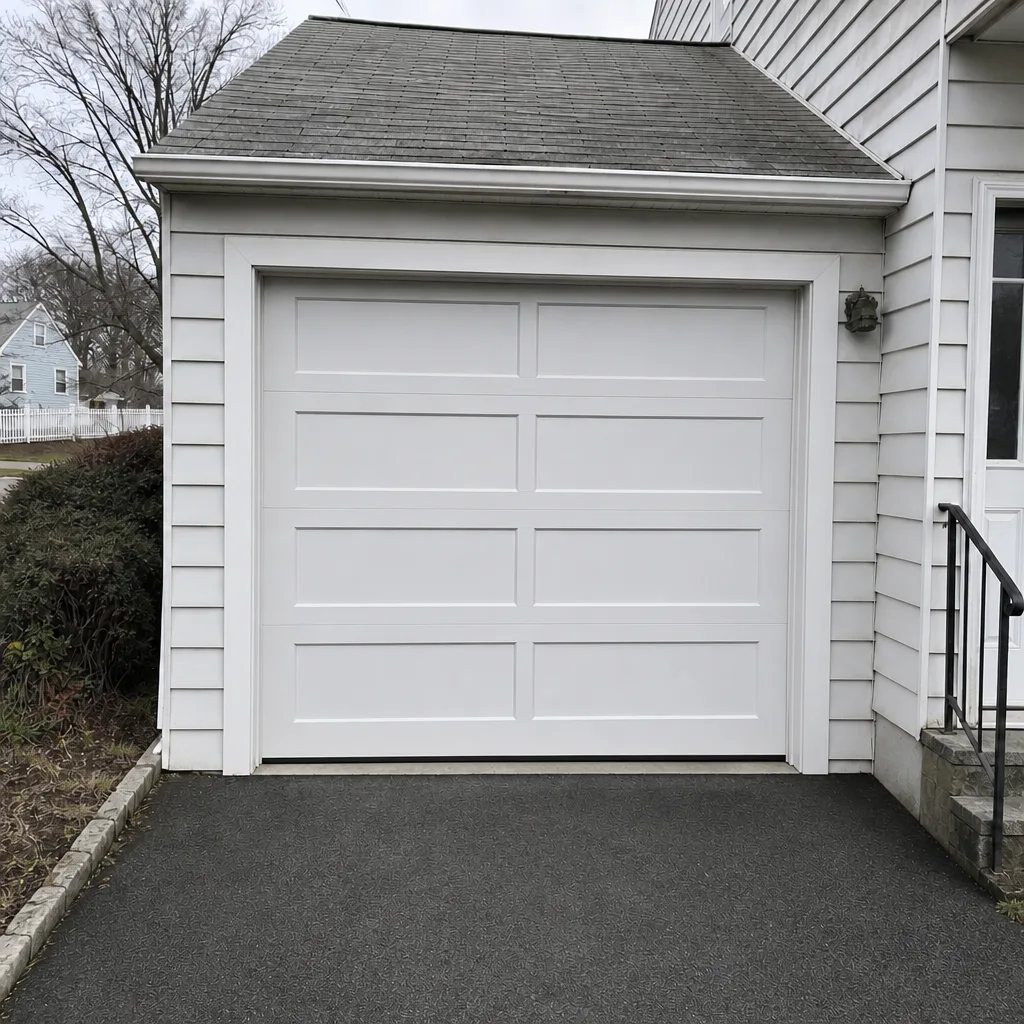 After
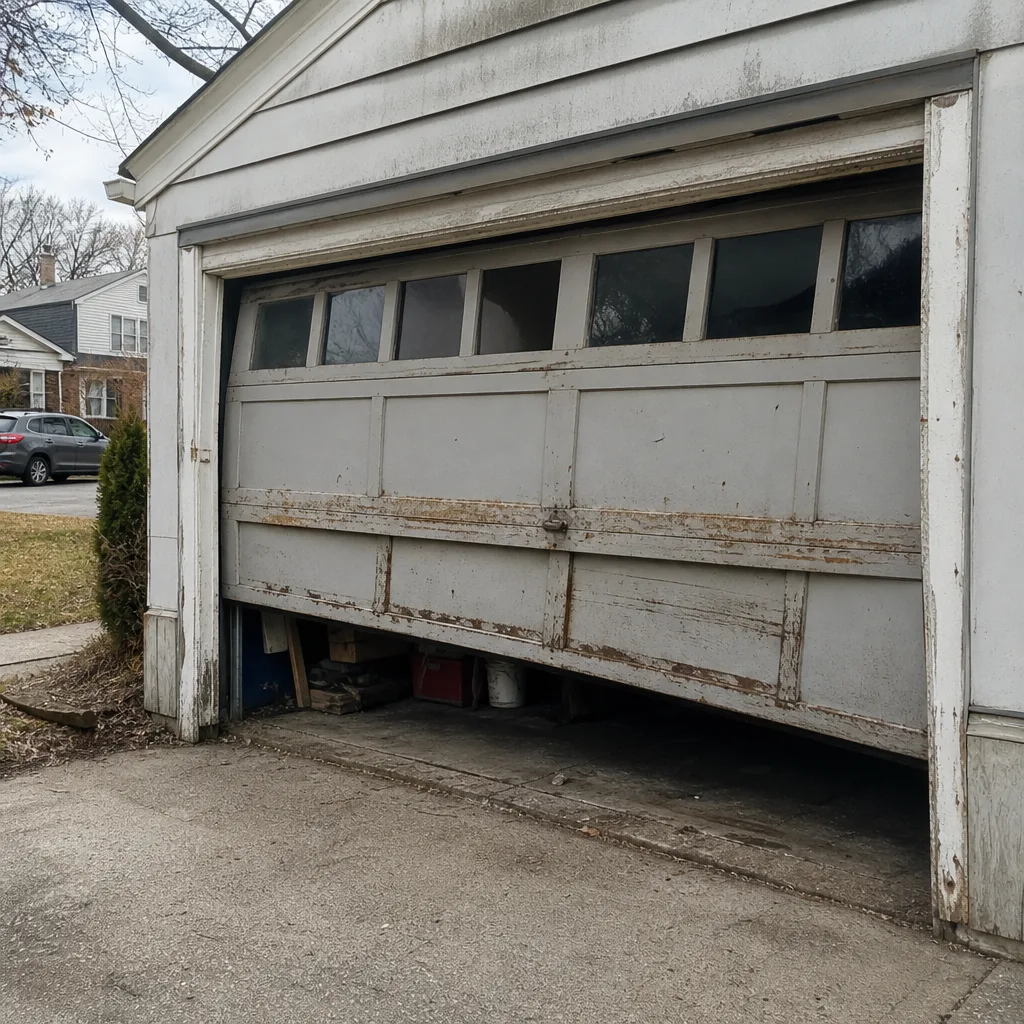 Before
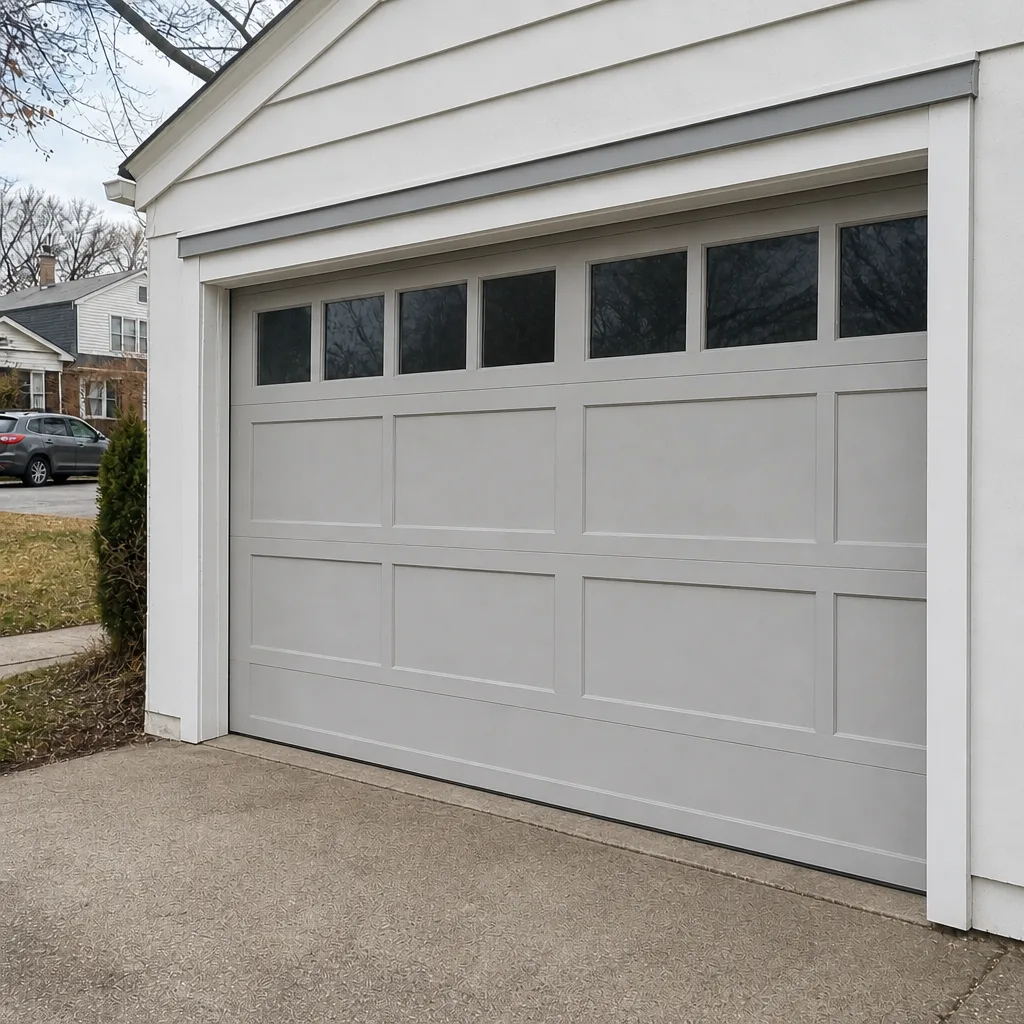 After
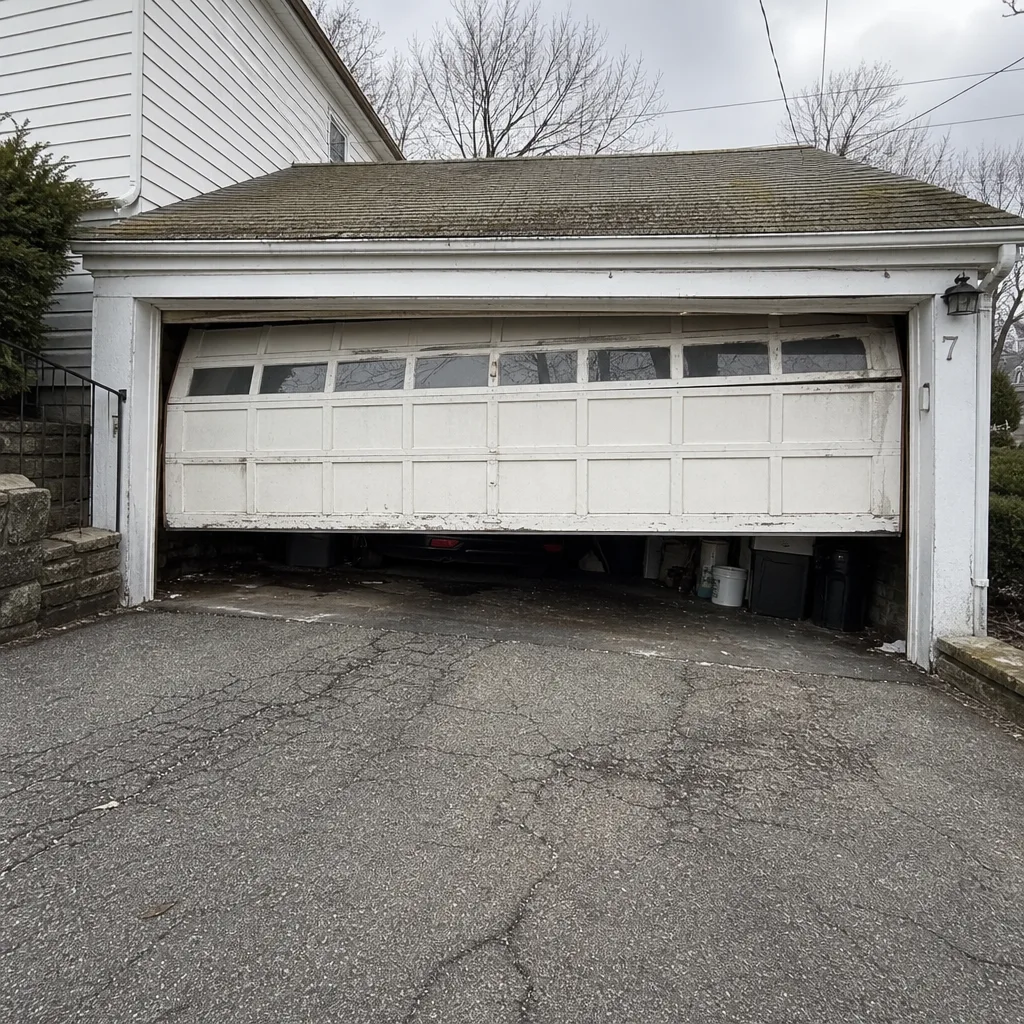 Before
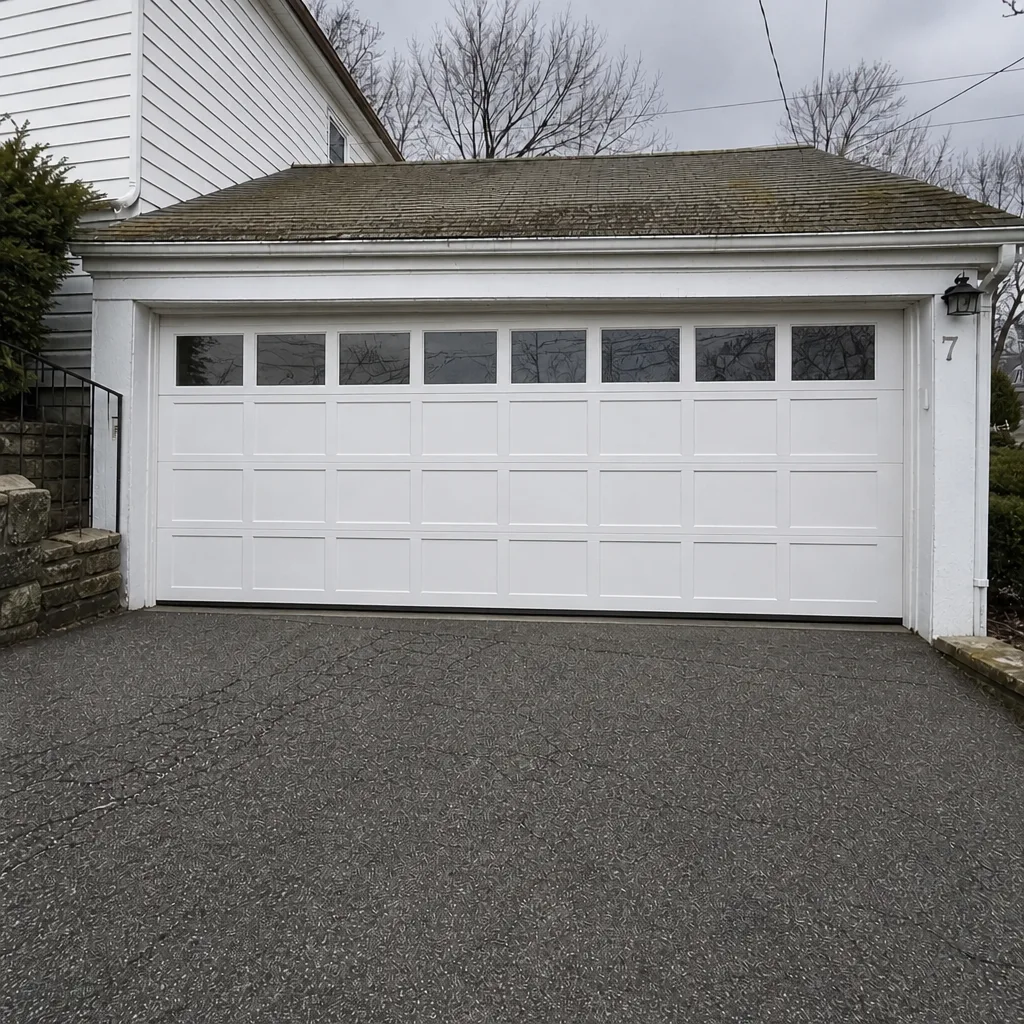 After
When to Call a Professional
Some garage door problems look like DIY territory and aren’t. A torsion spring stores enough energy to hurt someone seriously, and a door that’s come off its track can come down without warning. If the spring is broken, the cable is snapped, the door is off the track, or the opener is malfunctioning with the car trapped inside, it’s time to call.
For less urgent issues – a noisy door, a sticky hinge, a weather seal that’s failing – it’s still worth a professional look before the small problem becomes a spring or cable failure. Our technicians have up to 11 years of experience, and we handle repair, openers, springs, and installation under one team, so the diagnosis and the fix come from the same place. Garage Door Repair White Plains offers free estimates in White Plains – call (844) 484-7501.
Frequently Asked Questions
Spring repair prices depend on whether the door uses torsion or extension springs, the size and rating of the spring, and whether it’s a single spring or a matched pair. A pair of springs is two springs replaced together, so the price for a pair is roughly the cost of two individual springs plus labor. The written estimate sets the final price, and we quote it after seeing the door. Call (844) 484-7501 for an exact quote – estimates are free.
New York doesn’t issue a single statewide garage door license, but Westchester County requires home improvement contractors to hold a county home improvement license, plus liability insurance and workers’ compensation coverage. When you hire a White Plains contractor, ask for the county license number and proof of insurance, and confirm both are current. A company that can’t produce them shouldn’t be on your property.
Yes, same-day service is available for stuck doors, broken springs, snapped cables, and doors off track. We answer 24/7 and fast dispatch runs from 7am to 7pm, Sunday through Friday, closed Saturday. A call outside dispatch hours is booked into the next opening. Call (844) 484-7501 and we’ll get a technician dispatched.
The written estimate sets the price. The technician inspects the door, diagnoses the failure, and puts the parts and labor in writing before any work starts. If the inspection reveals a genuine additional problem outside the original scope, you’ll see a revised written estimate before that work proceeds. You approve the price before work begins, not after.
The local professional we connect you with is licensed and insured as their state and county require, and we’ll confirm the specific credentials before the job. Our own team works across the major garage door and opener brands – Chamberlain, Genie, LiftMaster, Clopay, Amarr, Wayne Dalton, Craftsman, and Raynor – so the diagnosis is brand-specific, not generic. Call (844) 484-7501 to book.
Yes, if the quote came without a stated spring size, the opener was condemned without a sensor or limit test, or the price is far outside the normal range. Springs and openers are the two most commonly misdiagnosed garage door problems, and a second opinion often reveals a smaller fix. Call (844) 484-7501 for a free second estimate.
The Bottom Line
Hiring a garage door contractor in White Plains isn’t about finding the fastest booking. It’s about filtering out the volume-first operations that dispatch generalists, quote before diagnosing, and sell parts the door doesn’t need. Verify the Westchester County license and insurance, ask the five questions that reveal whether you’re talking to a specialist, and require a written estimate that names the parts and defines the labor before work starts. Get a second opinion on spring and opener replacements specifically, and treat installation work as a measured, scheduled job rather than a same-day one. Do those things and the door gets fixed by the right people, at the price quoted, once.
Call (844) 484-7501 for a free estimate. We answer 24/7. Fast dispatch from 7am to 7pm, Sunday through Friday.
Written by the team at Garage Door Repair White Plains.