
Last updated November 22, 2026
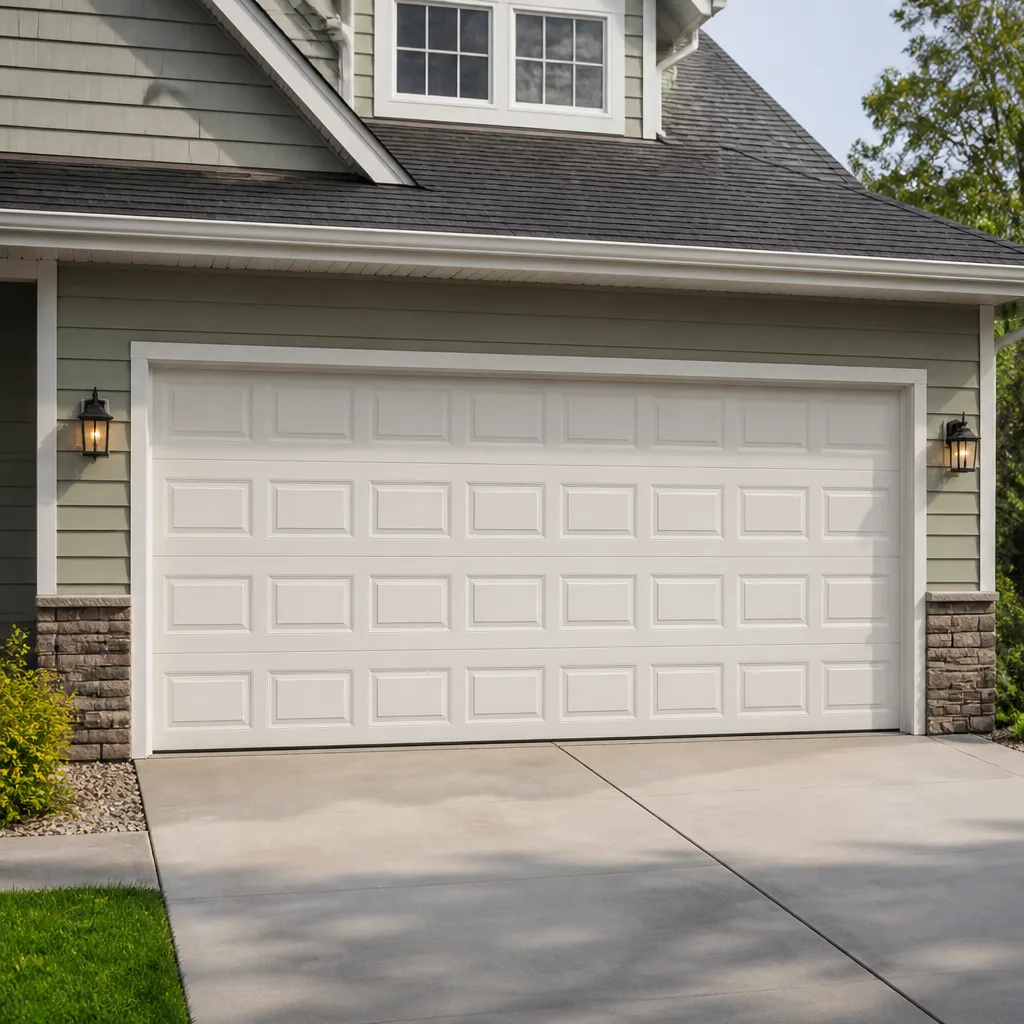 Raised-panel steel
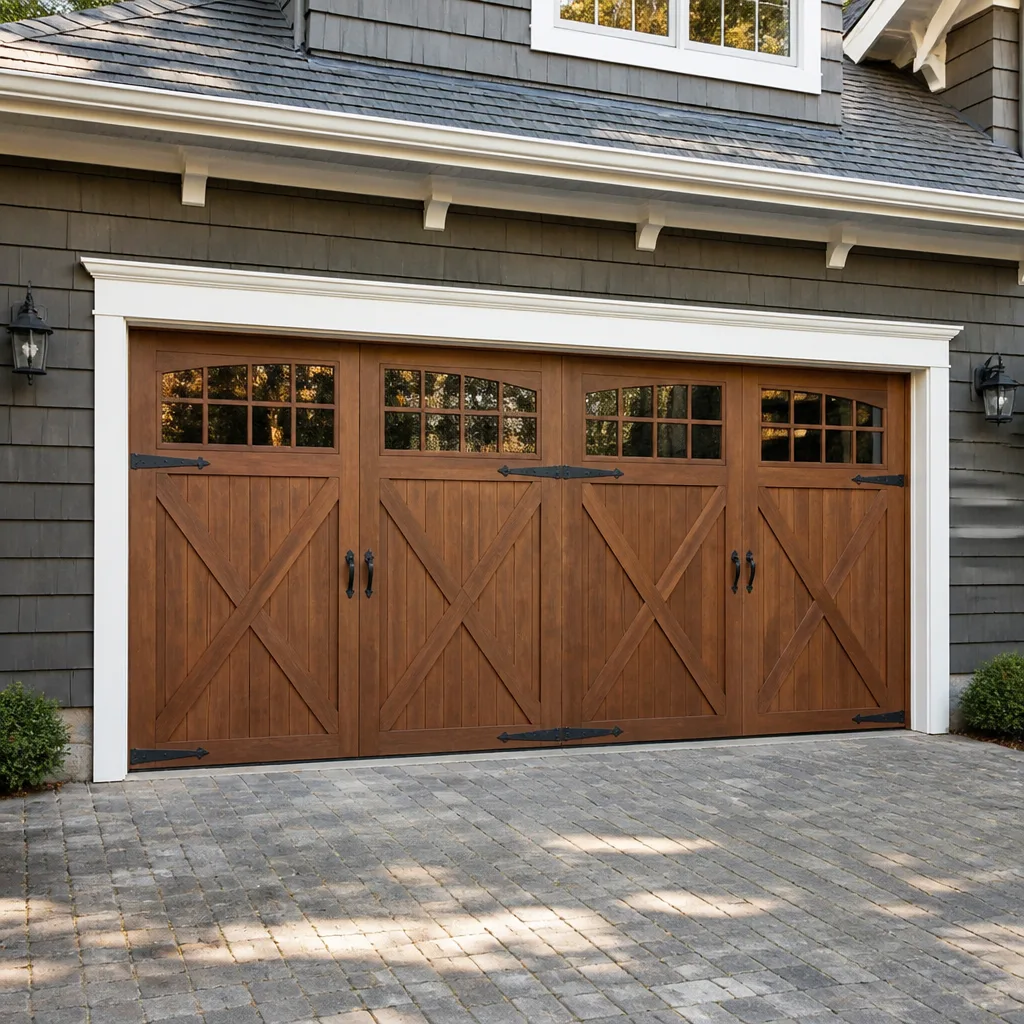 Carriage house
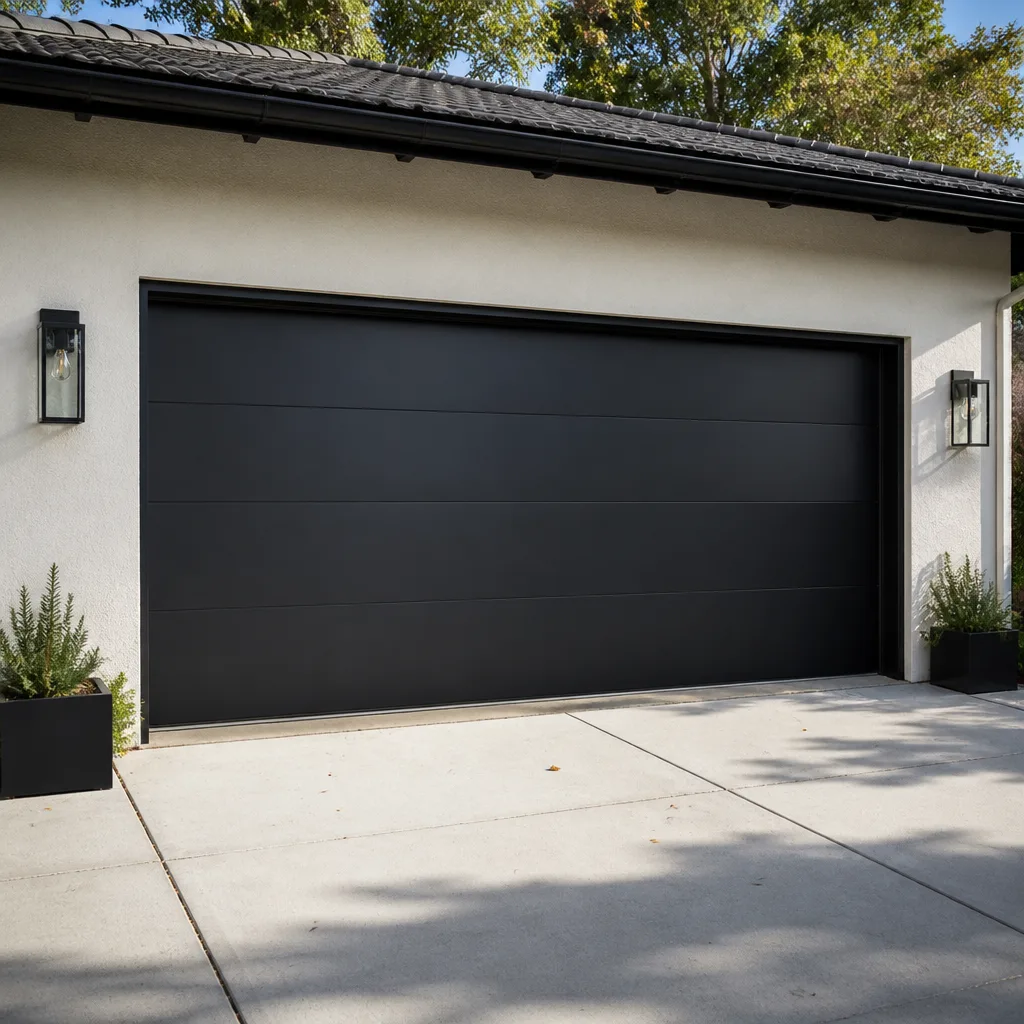 Modern flush
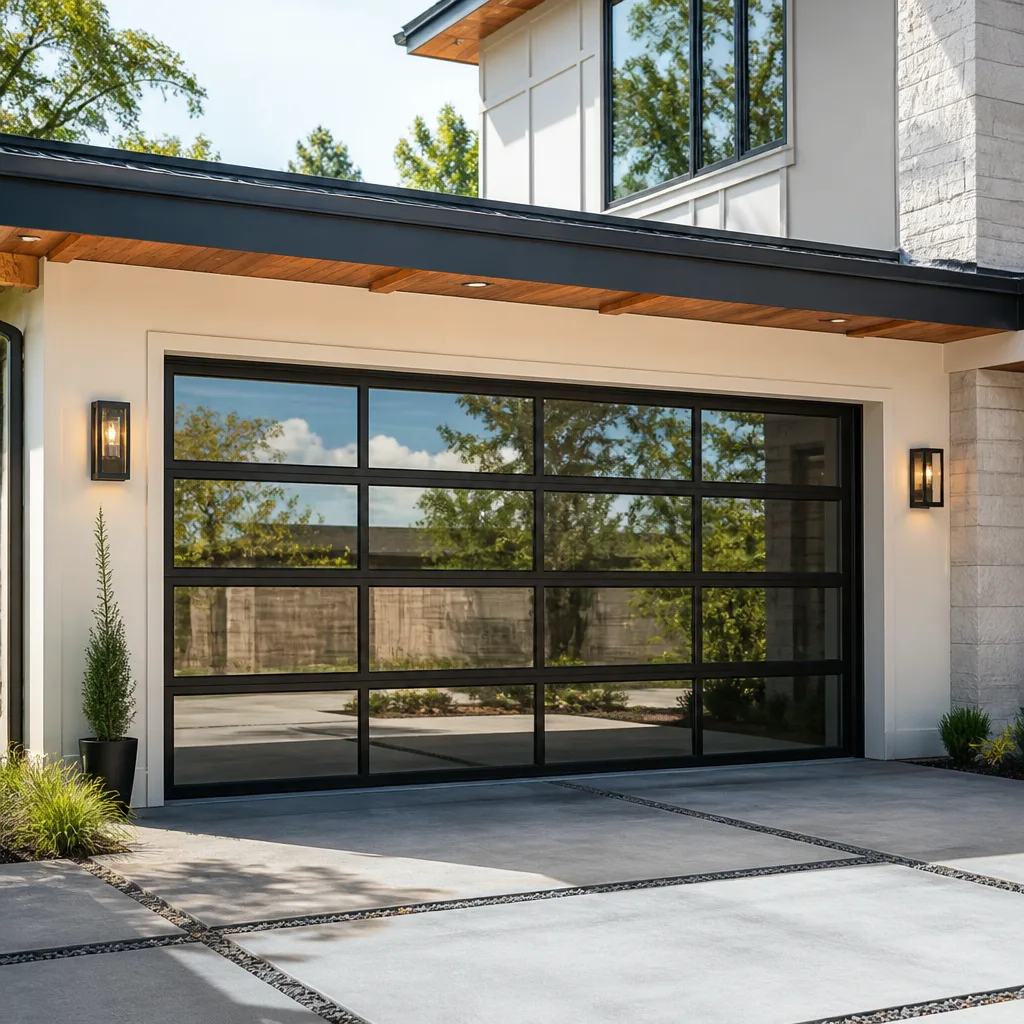 Full-view glass
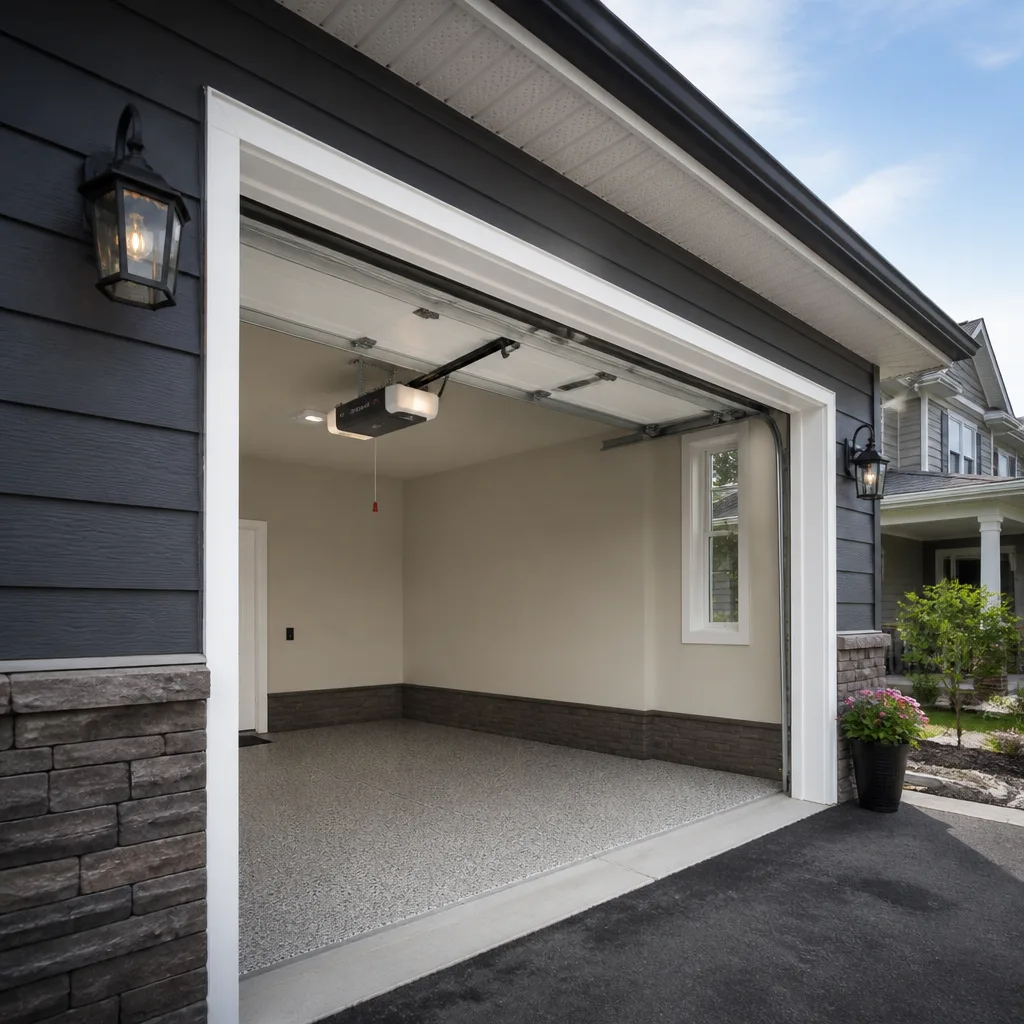 LiftMaster openers
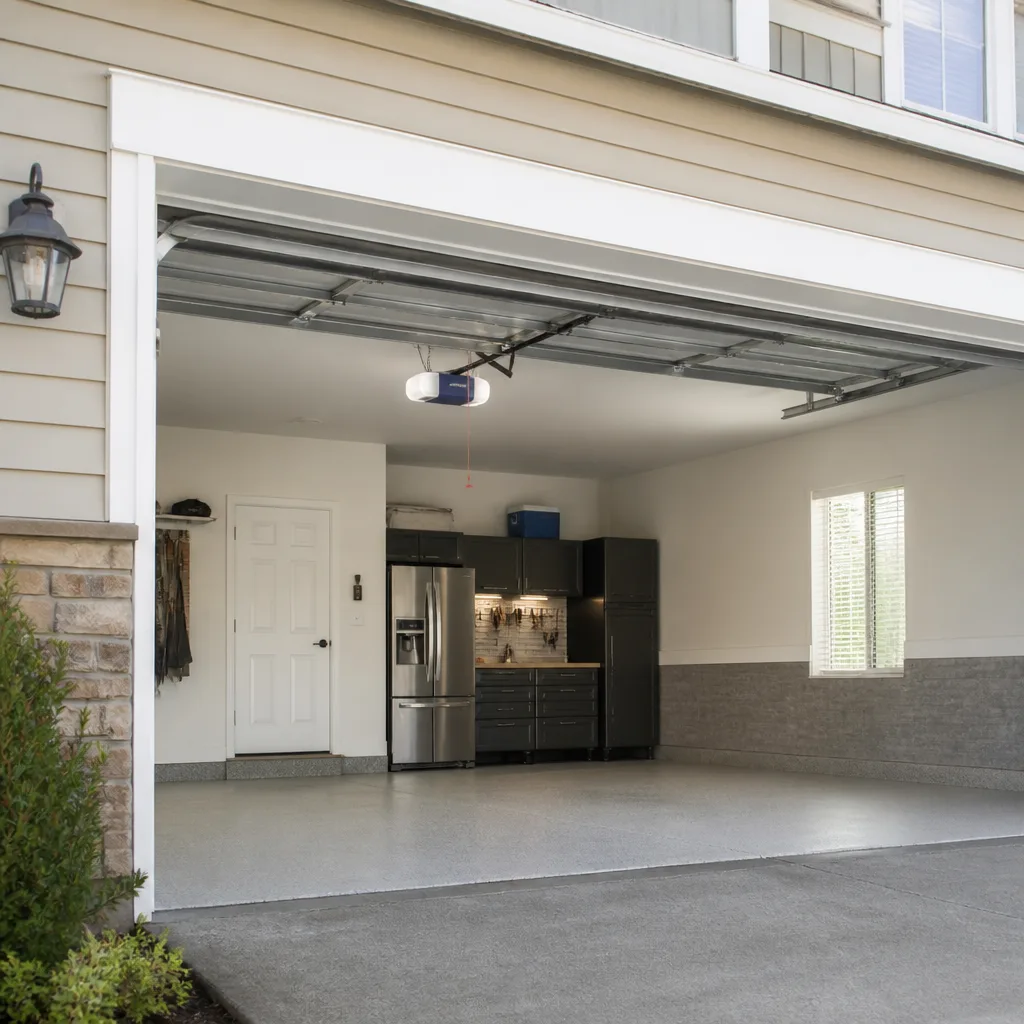 Chamberlain openers
Full 25-point door and opener safety check with every visit - springs, cables, rollers, tracks, and your LiftMaster or Chamberlain opener included
You get a price before we start. It does not change when the pro arrives.
Get your free estimateGarage Door Repair Troubleshooting in White Plains: Common Problems and How to Fix Them
Most homeowners treat a misbehaving garage door like a mystery. It groans, it stops halfway, it hangs crooked, and the instinct is to call someone and hope they figure it out. Here’s the counterintuitive part: your door is telling you exactly what’s wrong. A garage door is a simple machine with a handful of moving parts, and each failure mode produces a distinct symptom. Grinding points to one thing. Popping points to another. A door that reverses before it touches the floor is almost always an opener logic issue, not a broken spring.
This guide teaches you to read those symptoms the way a technician does, so you understand what’s happening in White Plains and can describe it clearly when you call. We’ll cover the six mechanical categories, the tests you can safely run yourself, the ones you should never touch, and how local weather shapes which failures show up most.
Quick Answer
Most garage door problems trace back to one of six root causes: springs, cables, rollers and tracks, the opener, the door panels and hardware, or the safety sensors. You can safely test the opener, sensors, balance, and rollers yourself. Spring and cable work is dangerous and should always go to a trained technician. The fastest way to a correct fix is to describe the exact symptom and when it happens; that lets a technician arrive with the right parts for your door’s brand.
Styles & brands we work with
- Raised-panel steel
- Carriage house
- Modern flush
- Full-view glass
- LiftMaster openers
- Chamberlain openers
Table of Contents
- The Six Root Causes Behind Almost Every Garage Door Problem
- Symptom-to-Cause Map: What Each Sound and Behavior Means
- How to Safely Test Your Door Before You Call Anyone
- Why White Plains Weather Accelerates Certain Failures
- What You Can Fix vs. What You Must Never Touch
- How to Describe Your Problem So You Get the Right Parts
- What Garage Door Repair Typically Costs in White Plains
- Common Mistakes to Avoid
The Six Root Causes Behind Almost Every Garage Door Problem
Before you diagnose anything, it helps to understand the system. A standard sectional garage door runs on a torsion or extension spring, two lift cables, a track on each side, rollers that ride in those tracks, hinges connecting the panels, and an opener that drives the whole thing. When something goes wrong, it’s almost always one of these six areas.
1. Springs. These counterbalance the door’s weight. A torsion spring sits on a shaft above the door; extension springs run along the sides. When a spring fails, the door suddenly feels like it weighs several hundred pounds because it does. This is the most common serious failure and the most dangerous to handle. If you suspect spring trouble, that’s a job for garage door spring repair.
2. Cables. These lift the door by connecting it to the spring system. A frayed or snapped cable lets the door drop unevenly. Cables are under extreme tension and are not a DIY item.
3. Rollers and tracks. Rollers wear and flat-spot; tracks bend or get knocked out of alignment. This is usually the cheapest category to fix and often the source of noise.
4. The opener. Motor, logic board, gears, drive belt or chain, and the wall controls all live here. Opener problems range from a dead remote to a stripped gear. If the door is manual and moves freely but the opener won’t drive it, the opener is your culprit.
5. Panels and hardware. Dings, dents, cracked panels, loose hinges, and rusted bolts. Cosmetic at first, structural later.
6. Safety sensors. The two eyes near the floor that reverse the door if something crosses them. Misalignment or a dirty lens is behind a surprising number of “the door won’t close” calls.
Knowing which category you’re in before a technician arrives means fewer return visits and less guessing. Our technicians have up to 11 years of experience across Amarr, Wayne Dalton, Craftsman, and Raynor systems, and they diagnose by brand and category rather than by trial and error.
Symptom-to-Cause Map: What Each Sound and Behavior Means
This is the heart of the guide. Listen to your door and match what you hear or see to the table below. Each symptom points to a specific mechanical failure, and knowing the difference is most of the diagnosis.
- A sharp pop or bang, then the door won’t lift. A torsion spring has snapped. Pull the manual release only if the door is already down; do not force it open. Stop and call for spring repair.
- Loud grinding when the door moves. Worn or seized rollers, or dry hinges and bearings. Sometimes a failing opener gear. Grinding is friction, and friction means worn metal.
- A scraping sound along the sides. The door is rubbing the track. Likely a bent track, a loose roller, or a panel that’s shifted.
- Rhythmic popping as the door travels. A flat-spotted roller catching on the track joint, or a loose hinge bolt turning as the door articulates.
- Door rises a foot or two, then stops. Often a broken spring, a binding track, or an opener force setting that’s too low.
- Door reverses before touching the floor. Safety sensor misalignment or obstruction, or an opener travel limit that needs adjustment.
- Door hangs crooked or one side lags. A cable problem, a broken spring on one side, or a roller that’s jumped the track.
- Motor hums but nothing moves. A stripped opener gear or a disconnected trolley. If the release cord was pulled and not reset, that’s the first thing to check.
- Remote works inconsistently. Dead battery, interference, or a worn opener logic board. Opener electronics live in garage door opener repair territory.
Write down the symptom, when it happens (on opening, on closing, both), and whether the door is manual or opener-driven. That three-part description is worth ten minutes of a technician’s time on site.
How to Safely Test Your Door Before You Call Anyone
You can learn a lot without tools and without risk, as long as you stay away from springs and cables. Follow these steps in order. If any step raises a safety concern, stop and call a professional.
- Look before you touch. With the door closed and the opener disengaged, visually inspect the springs above the door and along the sides. A gap in a torsion spring or a stretched-out extension spring is a failure. Do not attempt to test the door’s weight if a spring looks broken.
- Test the balance. With the door fully open and the opener disconnected (pull the release cord), lift the door a few inches by hand. A properly balanced door should stay put or drift slowly. If it drops fast or won’t lift, the springs are the issue.
- Check the safety sensors. Look at the two eyes at the bottom of the tracks. Each should have a steady indicator light. If one is dark or flickering, clean the lens, check for obstructions, and make sure they’re aimed at each other.
- Listen as the door runs. Re-engage the opener and cycle the door a couple of times. Note any new sound and where it comes from – overhead, sides, or motor.
- Test the wall control and remote separately. If the wall button works but the remote doesn’t, the issue is the remote or its battery, not the door.
These five checks take five minutes and give you a working hypothesis. They also tell you when to stop. If the door won’t lift by hand at all, or if a spring is visibly broken, that’s a hard stop – springs hold enormous stored energy and should only be handled by a trained technician. For a full diagnostic and repair, our garage door repair service handles spring, cable, track, and opener issues in one visit.
Why White Plains Weather Accelerates Certain Failures
White Plains sits close enough to Long Island Sound that the air carries real humidity through the warmer months, and the region gets genuine freeze-thaw cycles in winter. That combination quietly wears down specific parts faster than you’d see in a drier or more stable climate.
Humidity and moisture. Wet summer air works its way into steel hinges, bolts, and track joints. Rust builds, friction rises, and the door starts grinding and binding. The springs themselves don’t mind moisture much, but the hardware around them does. Homeowners in White Plains who skip lubricating their tracks and hinges tend to replace rollers sooner than they’d expect.
Freeze-thaw cycles. When water seeps into a track joint, hinge, or the bottom seal and freezes overnight, it expands. Repeated freeze and thaw loosens bolts, warps weather seals, and can put a slow bend in a track. You’ll notice doors that run fine in October suddenly scrape in January. The thermal expansion and contraction of metal panels also stresses the hinges connecting them.
Wood and older construction. Some White Plains homes, particularly in older neighborhoods around the downtown core and near the train stations, have wooden sub-framing around the garage opening. Wood moves with the seasons more than steel, so the whole opening can shift slightly over the course of a year, throwing a door’s alignment off. If your door ran clean last spring and now drags, seasonal movement is worth considering.
Salt on roads and driveways. Road salt gets tracked onto the driveway and into the garage, where it accelerates corrosion of rollers, hinges, and the door’s bottom fixtures. It’s not the coastal salt-air problem people describe near the ocean, but it’s real in a snowy, well-traveled suburb. A quick rinse of the lower hardware occasionally helps.
None of this damages a door overnight. It builds, which is why a door that’s been quietly fine for years suddenly starts acting up. If you’ve noticed any of these patterns, our garage door repair White Plains team can assess whether it’s weather wear or something more mechanical.
What You Can Fix vs. What You Must Never Touch
This is the most important section in the guide. Garage doors are safe when everything works and genuinely dangerous when parts fail, so knowing the line between the two protects you.
Safe to handle yourself:
- Cleaning and realigning safety sensors
- Changing remote batteries and reprogramming remotes
- Lubricating rollers, hinges, and tracks with a suitable garage door lubricant
- Tightening hinge and bracket bolts (with the door closed, never while it’s in motion)
- Keeping tracks clear of debris and checking for obvious bends
- Resetting the opener by unplugging and re-plugging it
Do not touch under any circumstances:
- Torsion springs and the shaft they ride on. A torsion spring is wound under extreme tension. A slip while working on one can cause serious injury. This is why spring work is a specialist job, not a homeowner one.
- Extension springs and their safety containment. Same principle; these store massive energy.
- Lift cables. Under constant tension, and a snapped cable can whip across a garage.
- Bottom brackets and cable drums. These are where the cables meet the door, and they can release stored energy.
- Electrical work inside the opener or wall wiring. If a wall control or opener needs rewiring, that’s a job for someone trained in it.
When in doubt, treat spring and cable work as strictly off-limits. Springs are the most dangerous component in your garage door system, and handling them wrong is how people get hurt. We treat this work as a specialty, not an add-on, which is why garage door spring repair is a core part of what we do.
How to Describe Your Problem So You Get the Right Parts
Here’s the practical payoff of learning to read your symptoms. When you call, the more precise your description, the more likely the technician shows up with the right parts for your exact door. That’s the difference between a one-visit repair and a return appointment.
Use this checklist when you call. Have it in front of you.
- Door brand and type. If you can, note the manufacturer – Amarr, Wayne Dalton, Craftsman, Raynor, or another – and whether it’s a sectional roll-up or a single-piece door. The model sticker is often on the inside of a panel.
- The symptom in one sentence. “It grinds going up.” “It pops at the top and stops.” “It reverses before it hits the floor.” Be specific about the sound and the location.
- When it happens. Opening, closing, both, or only from the remote. This alone narrows down which category you’re in.
- What you’ve already tried. Sensors cleaned? Battery changed? Release cord pulled? Tell the technician, so they don’t repeat your steps.
- Manual or opener-driven. And the opener brand, if you know it. LiftMaster, Chamberlain and Genie all have slightly different behaviors and force settings.
- Recent history. Any dents, a recent storm, a car bumping the door, or a move-in a few months ago. All of it informs the diagnosis.
With that description, a technician can often pre-diagnose over the phone and arrive ready. Brand-specific diagnostics, not guesswork, is what makes the difference. Our technicians are experienced with LiftMaster, Chamberlain, Genie, Clopay, Amarr, Wayne Dalton, Craftsman, and Raynor products, so they know the specific failure patterns of each. When we connect you to a local pro for garage door opener repair, that brand knowledge is what gets it fixed the first time.
What Garage Door Repair Typically Costs in White Plains
Cost depends on the category of failure, not just the door. A rollers-and-lubrication job costs a fraction of a spring replacement, and a full panel swap costs more than either. Here are typical estimated ranges for common repairs in the White Plains area. Every job is quoted per job by a written estimate, and that written estimate sets the final price; nothing starts until you’ve agreed to it.
- Roller replacement (all rollers): typically $90 to $180 per door
- Track alignment or repair: typically $100 to $200
- Hinge and hardware replacement: typically $75 to $160
- Single torsion spring replacement: typically $150 to $300
- Matched pair of torsion springs: usually about twice the single-spring range, since both are replaced together
- Cable replacement: typically $120 to $250
- Opener repair or logic board replacement: typically $150 to $350 depending on brand and part
- Opener replacement (unit and install): typically $400 to $800 depending on opener type
- Full door replacement: typically $900 to $2,500 and up depending on door type and size
These are estimates, not quotes. The final number is set by the written estimate after a technician sees the door. For a free estimate on your specific repair, call (844) 484-7501. We answer 24/7. Fast dispatch from 7am to 7pm, Sunday through Friday.
Common Mistakes to Avoid
We see the same handful of mistakes repeatedly in White Plains, and most of them cost more than the repair itself.
- Pulling the manual release and not resetting it. If you pull the release cord to test the door by hand and then use the opener without re-engaging the trolley, the motor runs but nothing moves. Always reset the trolley before testing.
- Greasing the track’s running surface. The smooth face of the track where rollers roll should stay clean; lubricant attracts grit and makes rollers slide instead of roll. Lubricate the hinges, bearings, and roller stems – not the track face.
- WD-40 on springs and hinges. A light household spray is not the same as a garage door lubricant. It dries out and leaves a sticky residue that collects dust. Use a proper garage door lubricant.
- Forcing a broken door up with a car or a pry bar. When a spring is broken or a cable is snapped, forcing the door strains panels, hinges, and the opener. It can also injure you. Stop and call.
- Ignoring a slow seasonal change. A door that gets louder a little at a time is telling you the rollers or hinges are wearing. Addressing it early is cheaper than waiting for a track or panel to fail.
- Assuming the opener is the problem when it’s the springs. A door that won’t lift and a motor that hums can look like a motor failure, but if the springs are broken, the opener is working hard against an impossible load. Diagnose the door before the opener.
- Skipping the safety sensor check. Many “won’t close” calls are a misaligned or dirty sensor. A two-minute check saves a service visit.
- Trying to source a specific part by brand name online. Many aftermarket rollers and springs look identical but aren’t rated for your door’s weight. Matching the spring to the door is a calculation, not a guess.
See the difference
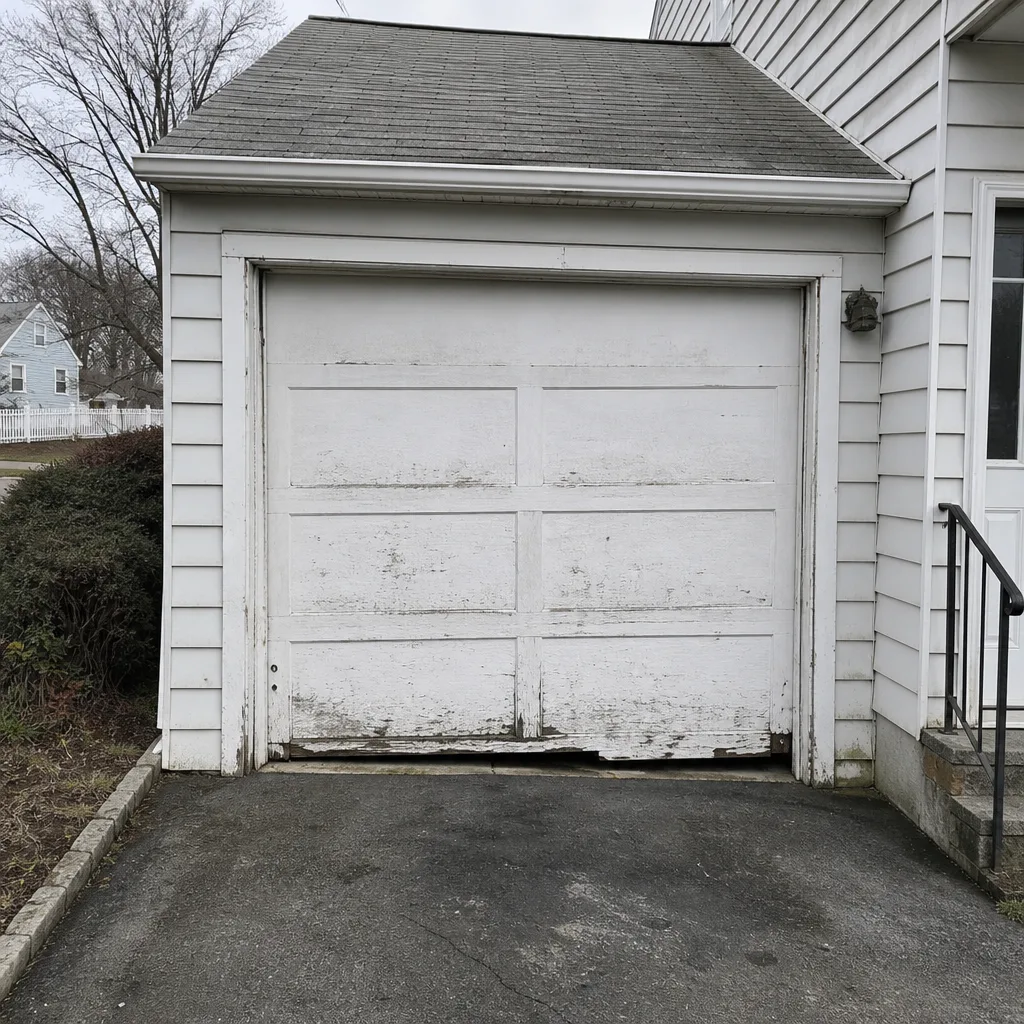 Before
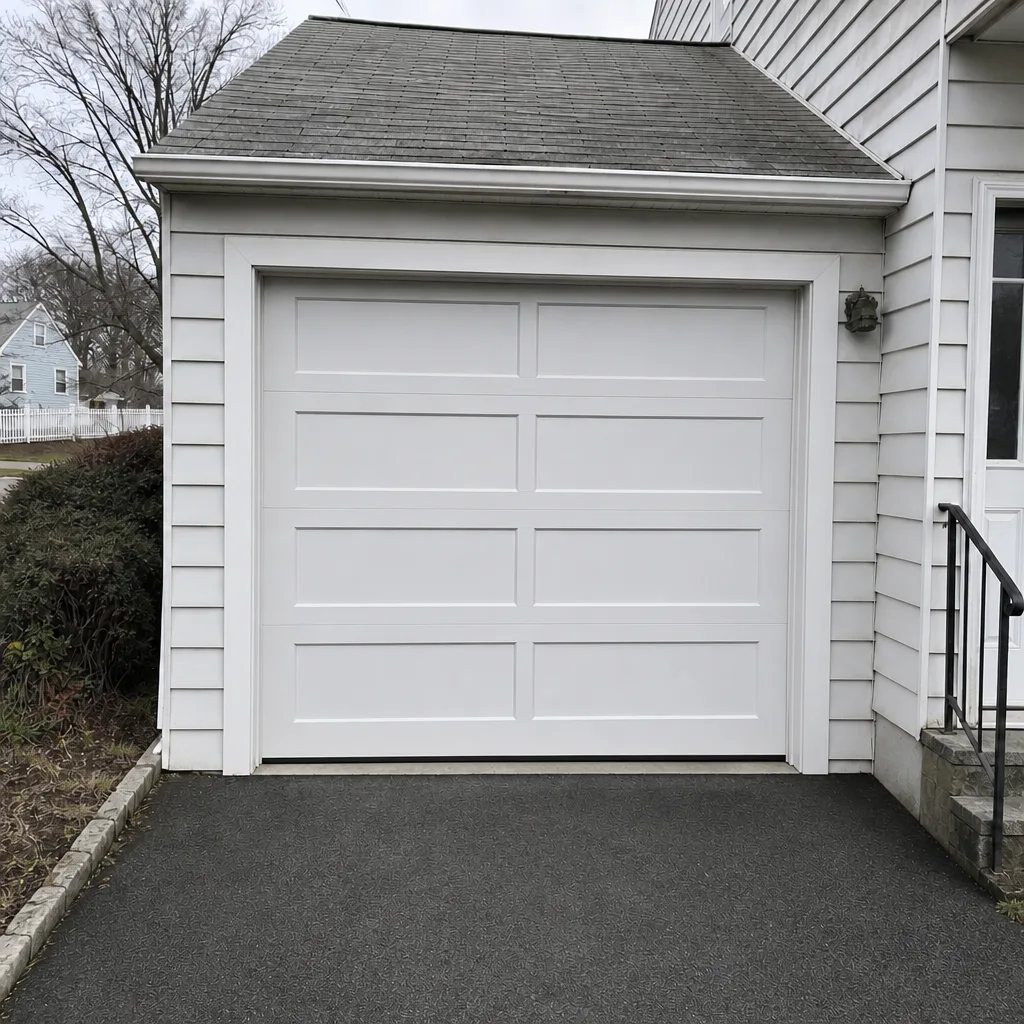 After
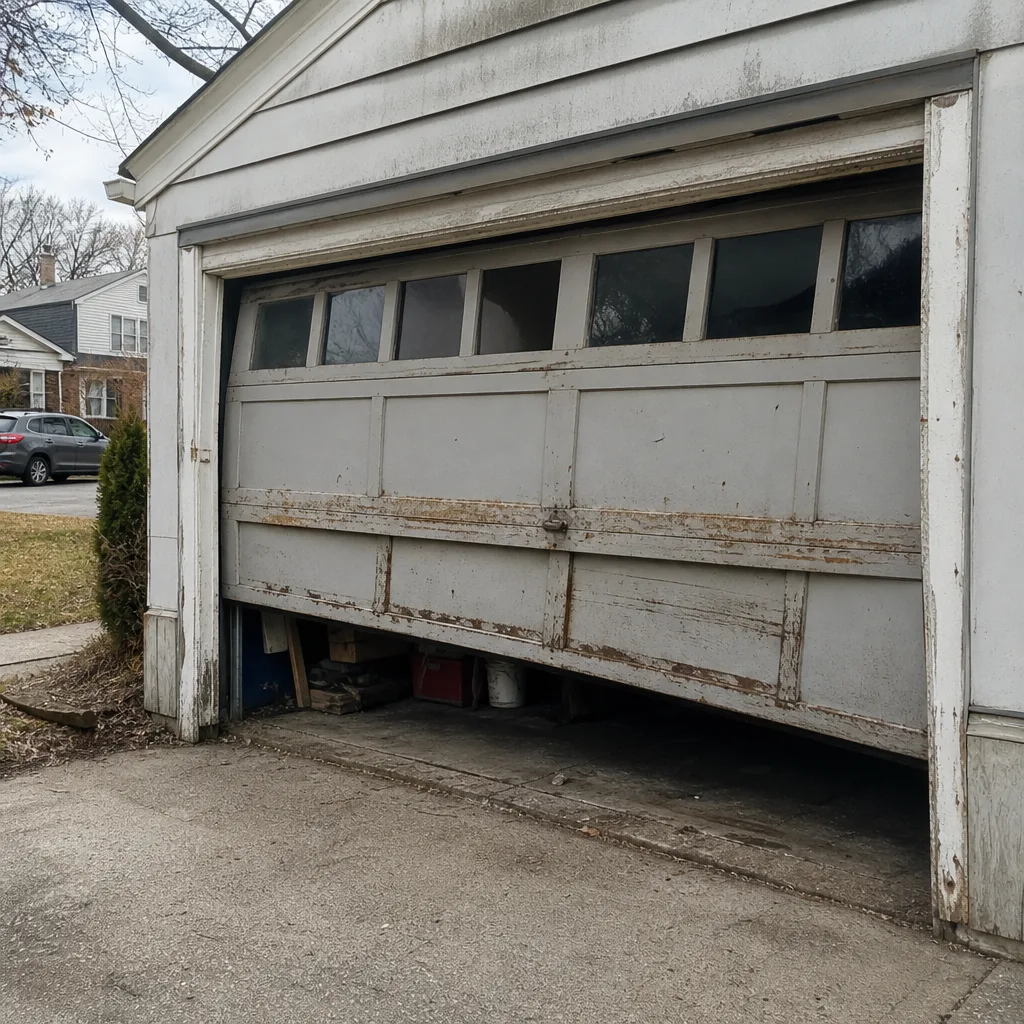 Before
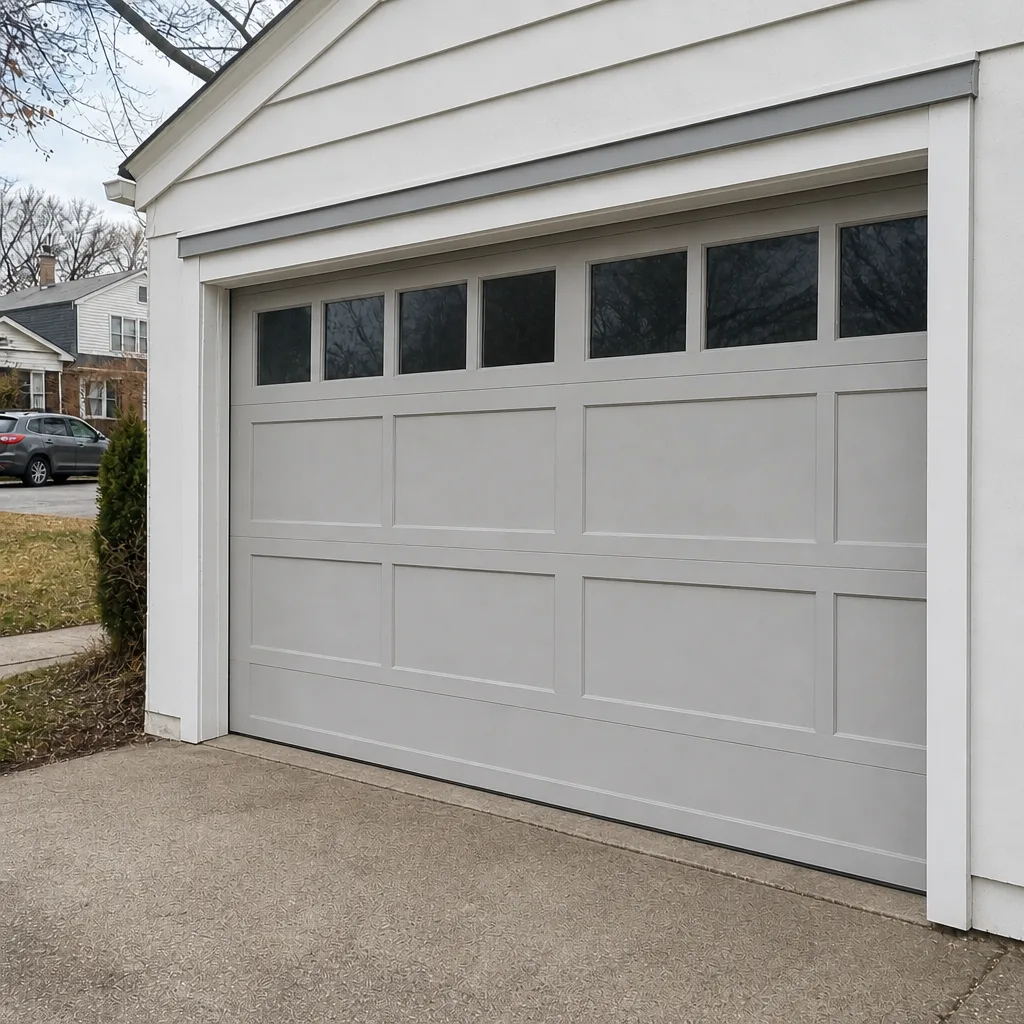 After
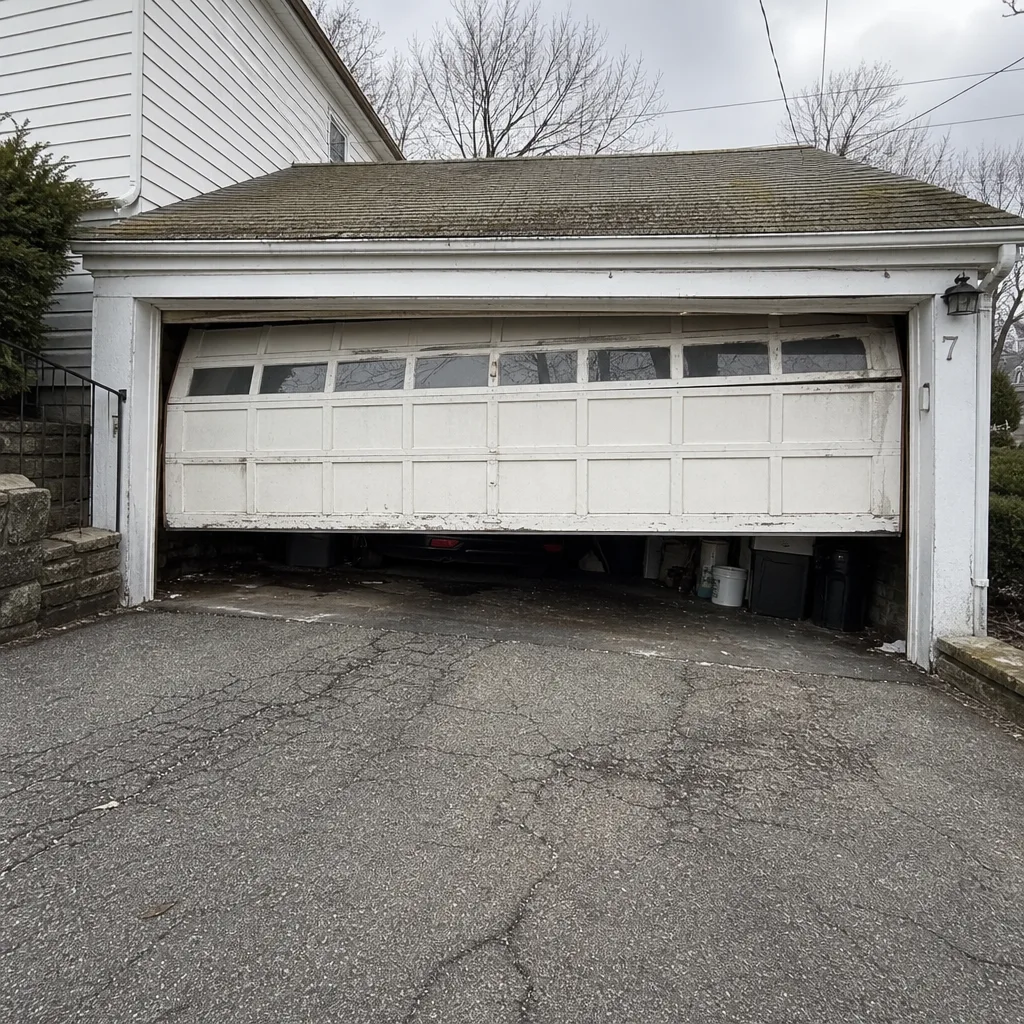 Before
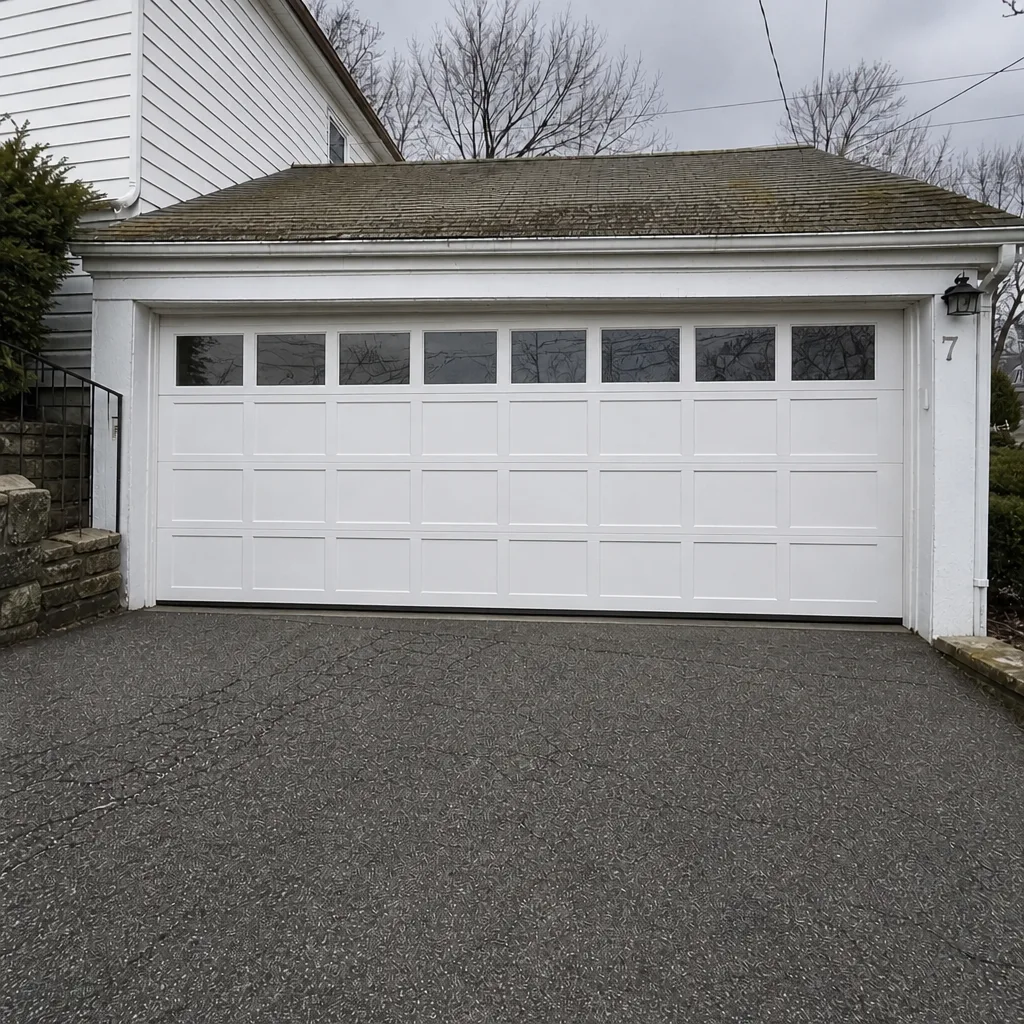 After
When to Call a Professional
Some problems are genuinely yours to handle, and some are not. Call a professional if any of the following is true: a spring is visibly broken or the door won’t lift by hand; a cable is frayed, loose, or off its drum; the track is bent or the door has jumped the track; the door hangs crooked or drops on one side; the opener hums but won’t move the door; you hear grinding or popping that gets worse; the door reverses without a visible obstruction after you’ve cleaned and realigned the sensors; or any part of the door feels unstable. Those are the cases where diagnosis-and-repair by a trained technician is worth the call. Springs alone make the case: they’re under extreme tension and are not a homeowner job.
Garage Door Repair White Plains offers free estimates in White Plains – call (844) 484-7501. We answer 24/7. Fast dispatch from 7am to 7pm, Sunday through Friday, and same-day repair is often possible on the common failures.
Frequently Asked Questions
Test the door by hand with the opener disconnected (pull the release cord). If the door is very heavy, drops fast, or won’t lift, the spring is the problem. If the door lifts easily by hand but the opener won’t move it, the opener is. A broken spring almost always makes the door heavy; a failing opener leaves the door balanced and easy to move.
No, and you shouldn’t try. Torsion and extension springs are wound under extreme tension and can release dangerous force if handled incorrectly. Spring replacement requires the right tools, the right spring rating for your door’s weight, and trained hands. This is the one part of garage door repair where DIY is genuinely unsafe. Call (844) 484-7501 for spring repair instead – estimates are free.
Freeze-thaw cycles are usually the answer. Water freezes in track joints, hinges, and the bottom seal and expands, loosening bolts and adding friction. Lubricant thickens in cold, too. If your door drags every winter and recovers each spring, seasonal wear is the likely cause. Lubricating the hinges and rollers before cold sets in helps. If it still binds, call us to check the tracks and springs.
Most common repairs – rollers, tracks, sensors, and single-spring replacement – are done in one visit of an hour or two. A matched pair of springs is similar. Opener repairs and full door replacements take longer and may require ordering a specific part for your brand. Same-day repair is often possible on the simple failures; scheduled work like a full door replacement is measured and priced in advance.
No, not after the written estimate. Our process is to inspect, diagnose, and quote before any work starts. That written estimate sets the final price, and nothing proceeds until you agree to it. If a technician finds a second issue during the repair, they’ll tell you and requote – you still decide before any work begins. Estimates are free, and the number in the written estimate is the number you pay.
Very likely, yes. Our technicians are experienced with LiftMaster, Chamberlain, Genie, Clopay, Amarr, Wayne Dalton, Craftsman, and Raynor products, including older drive systems and Wi-Fi-connected smart openers. When you call, tell us the brand and model if you can find it, and we’ll match the right technician to it. Brand-specific diagnostics save you time and a return visit.
The Bottom Line
Garage door troubleshooting comes down to reading symptoms and knowing your limits. Six categories cover nearly every failure: springs, cables, rollers and tracks, the opener, the door’s panels and hardware, and the safety sensors. You can safely test the balance, sensors, opener controls, and rollers yourself, and that five-minute check often tells you exactly what’s wrong. What you should never touch is spring and cable work – the stored energy there is real and dangerous. Keep a description of your symptom, brand, and timing ready when you call, and you’ll get a faster, more accurate fix. In White Plains, humidity and freeze-thaw cycles push hardware wear along faster than you might expect, so seasonal checks pay off. If you’d rather hand it to someone who knows your brand, that’s what we’re here for.
For a free estimate or to schedule a diagnostic, call (844) 484-7501. We answer 24/7. Fast dispatch from 7am to 7pm, Sunday through Friday. From a grinding roller to a snapped spring, one call covers it all.
Written by the team at Garage Door Repair White Plains.