
Last updated November 22, 2026
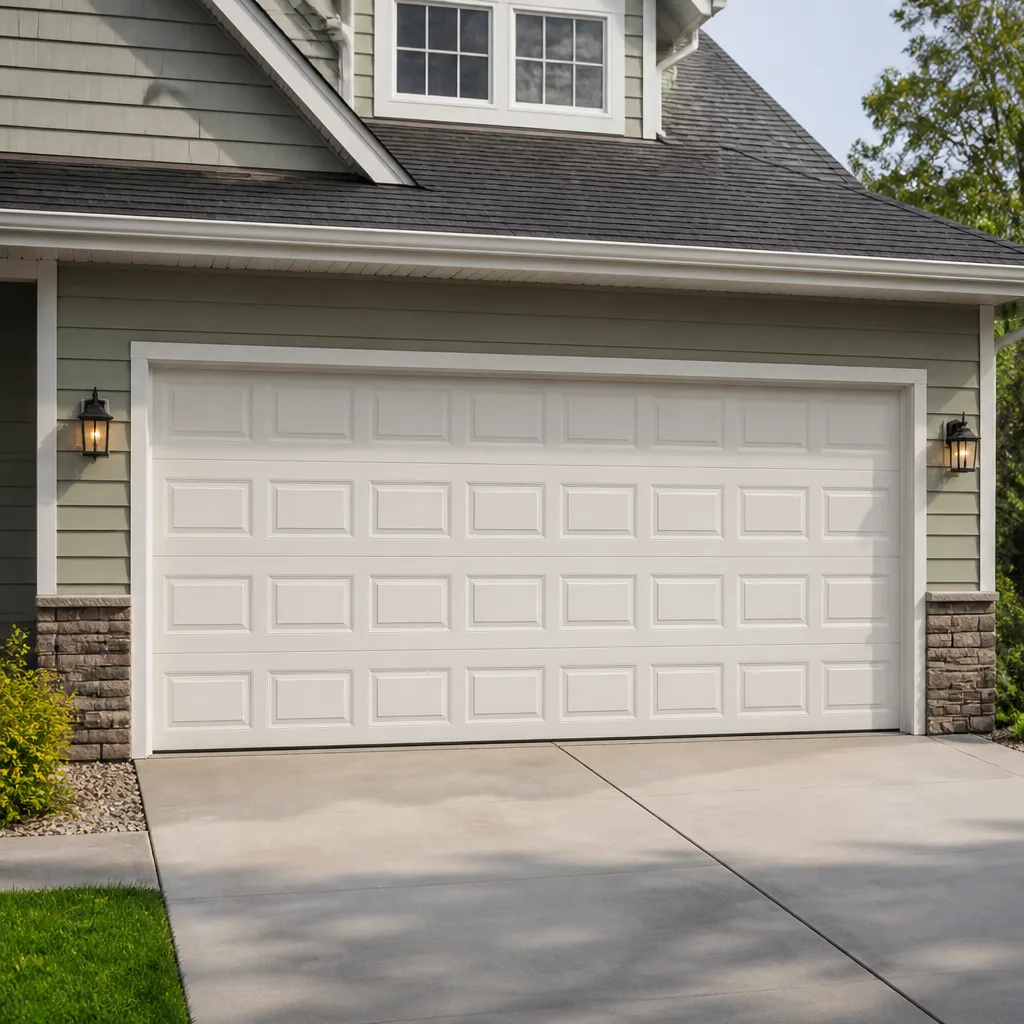 Raised-panel steel
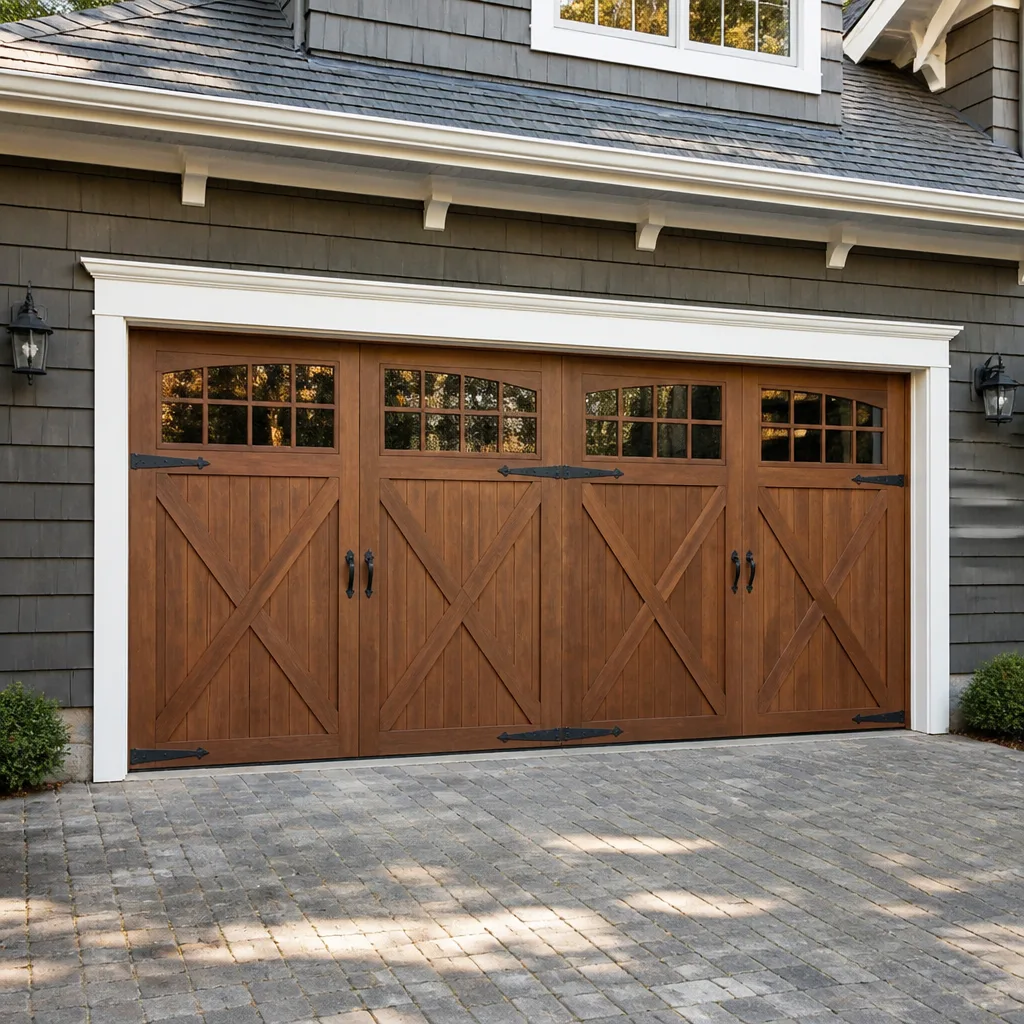 Carriage house
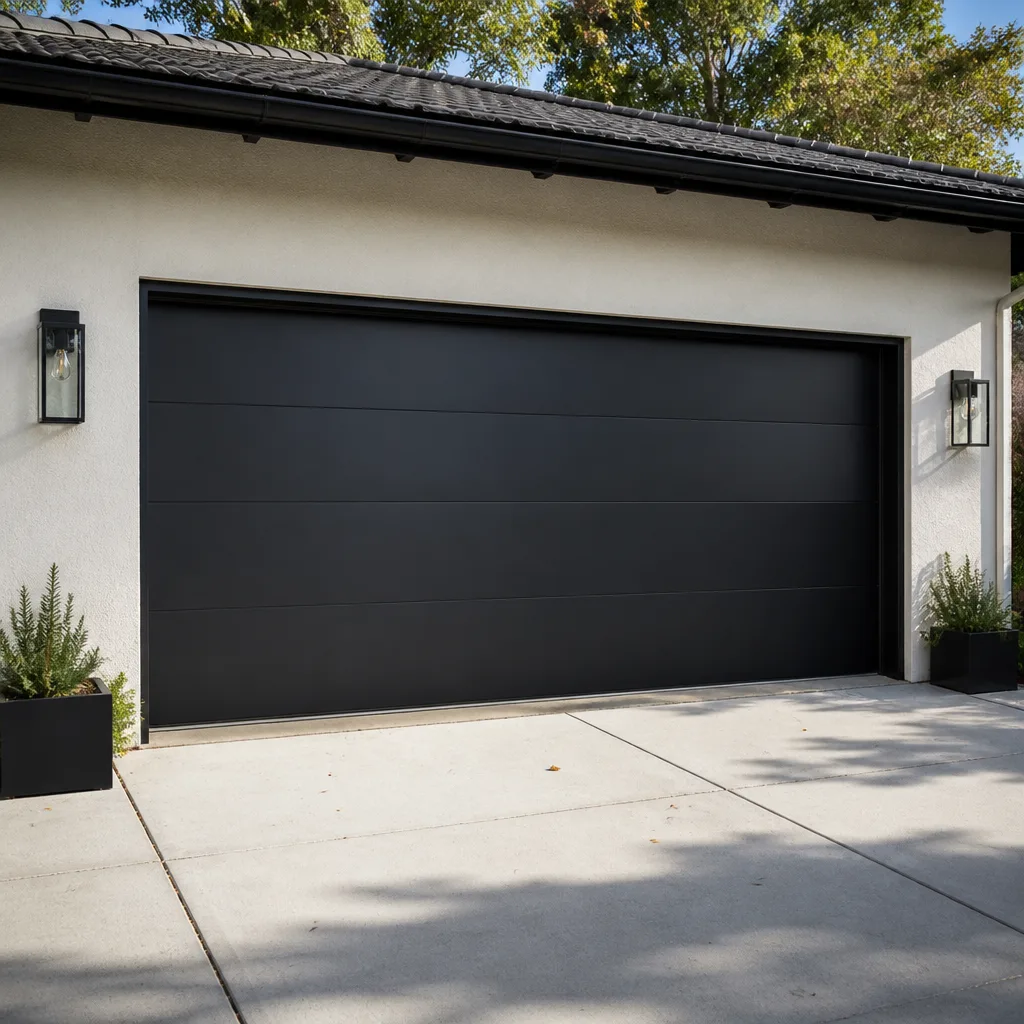 Modern flush
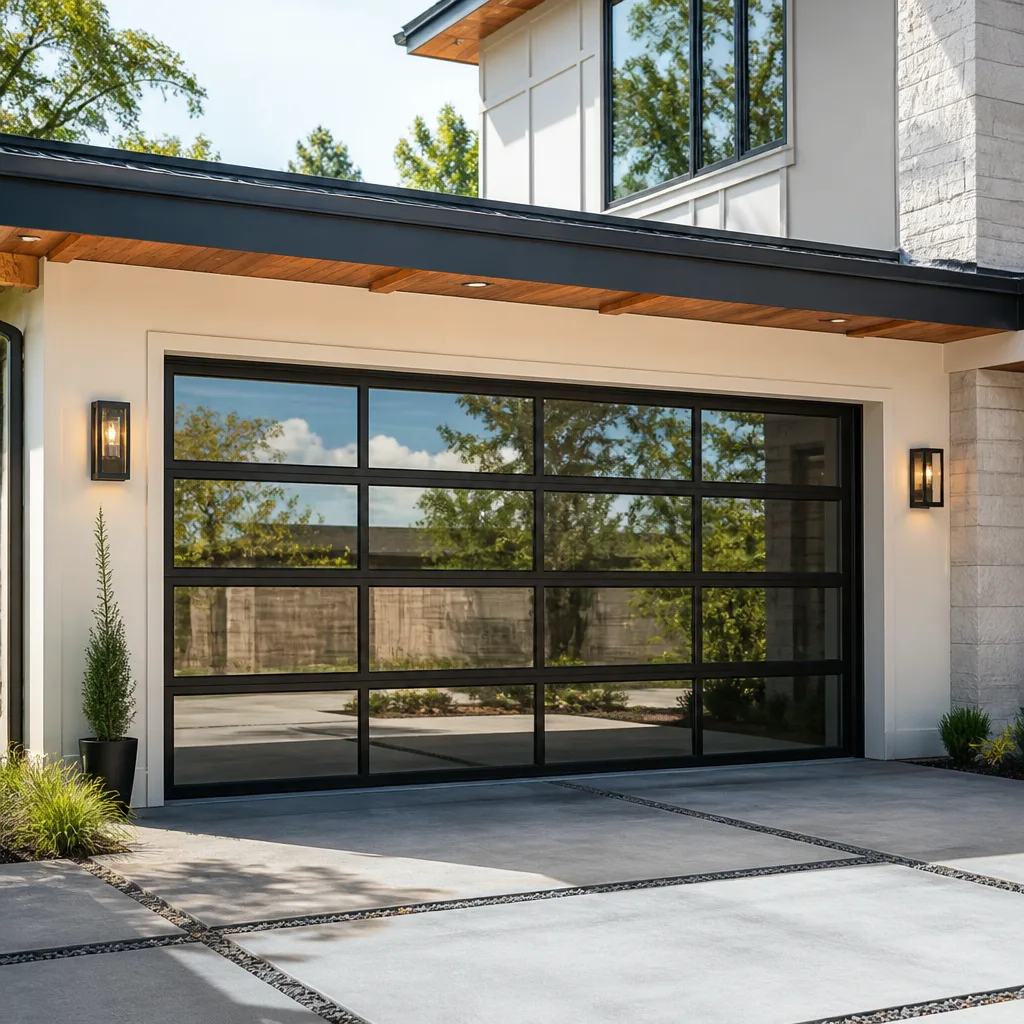 Full-view glass
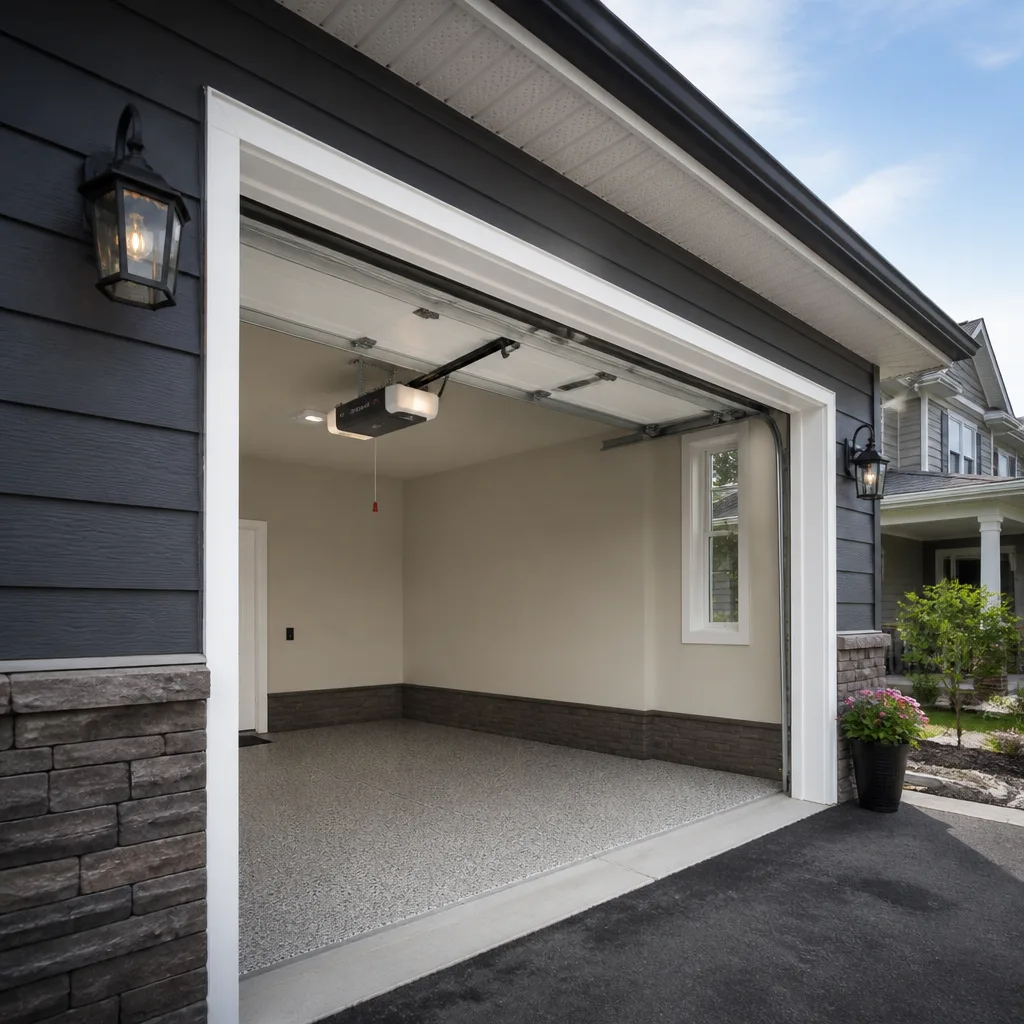 LiftMaster openers
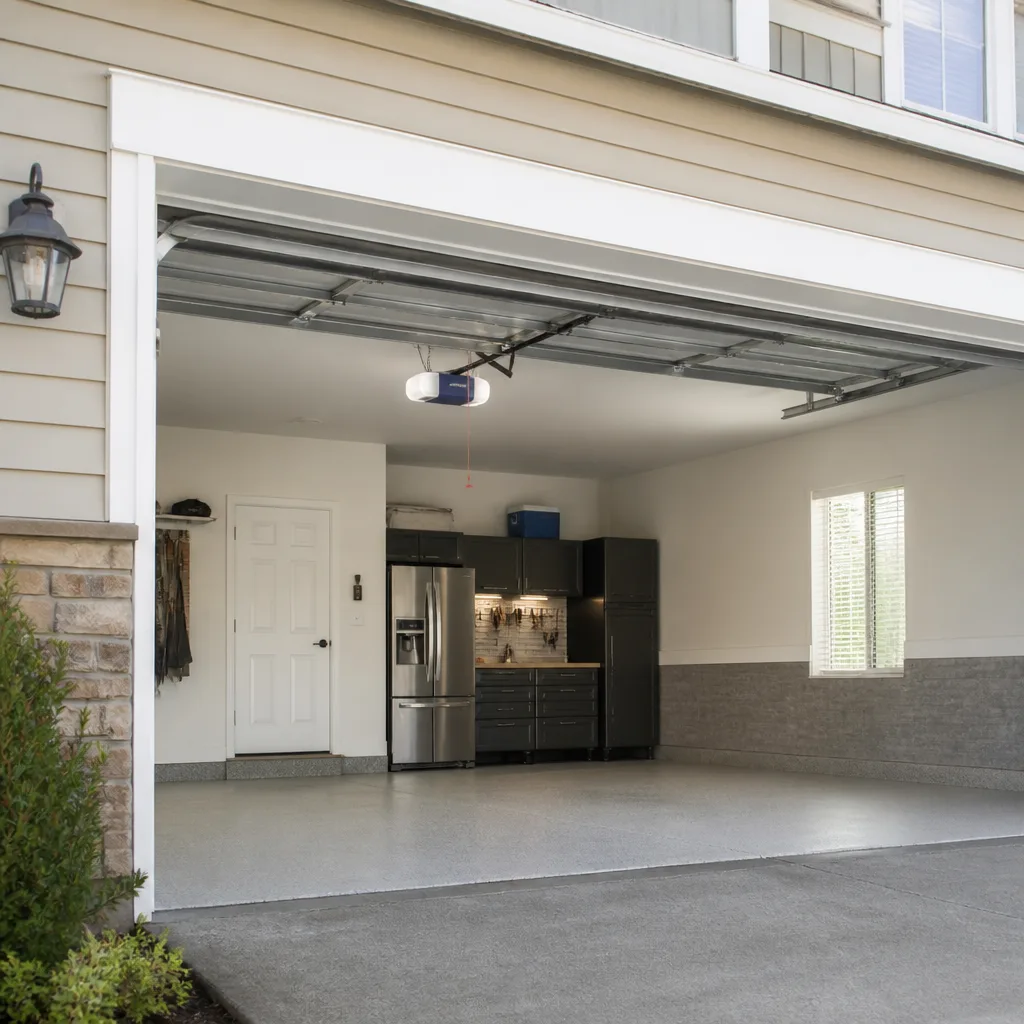 Chamberlain openers
Full 25-point door and opener safety check with every visit - springs, cables, rollers, tracks, and your LiftMaster or Chamberlain opener included
You get a price before we start. It does not change when the pro arrives.
Get your free estimateDIY vs Professional Garage Door: The White Plains Homeowner’s Decision Guide
The garage door is the one part of your house that stores serious mechanical energy every single day, and that changes the DIY math in a way most homeowners don’t expect. Painting a door, swapping weatherstripping, and pairing a new Chamberlain opener with your phone are all jobs a careful homeowner can handle with basic tools. Replacing a torsion spring is not, and it isn’t because you lack skill. It’s because one misstep can send you to the emergency room. This White Plains guide breaks the work down task by task, tells you which jobs save real money and which ones cost more once a mistake is made, and shows you how to spot the line before you cross it.
Quick Answer
Some garage door tasks are genuinely safe to do yourself: weatherstripping, cleaning and lubricating hardware, painting, and installing a smart opener on an existing, balanced door. Others carry an asymmetric risk where one mistake causes injury or damages equipment beyond what the savings justify: torsion and extension spring work, cable replacement, and any repair that means disconnecting the door from its springs. For anything that leaves your door stuck, unsafe, or out of balance, the right move is a professional who works on your brand. We answer 24/7 at (844) 484-7501, with fast dispatch from 7am to 7pm, Sunday through Friday.
Styles & brands we work with
- Raised-panel steel
- Carriage house
- Modern flush
- Full-view glass
- LiftMaster openers
- Chamberlain openers
Table of Contents
- Why the DIY Question Is About Risk, Not Skill
- The Task-by-Task Breakdown
- The Jobs That Are Dangerous at Any Skill Level
- The Gray Zone: Self-Assess Honestly Before You Start
- What Actually Voids a Manufacturer Warranty
- When DIY Saves Money in White Plains and When It Backfires
- How White Plains Weather and Housing Shape the Decision
- How to Describe a Failed Repair to a Technician
Why the DIY Question Is About Risk, Not Skill
Most DIY advice treats garage door work as a skill ladder. Easy jobs at the bottom, hard jobs at the top, and your job somewhere in the middle depending on how handy you are. That’s the wrong model for these doors.
The right model is risk. A torsion spring on a standard residential door holds enough stored energy to cause serious injury in under a second, and the danger doesn’t scale down just because you watched three videos and bought the winding bars. The energy is either under control or it isn’t. Skill helps you set the winding rods correctly, but it doesn’t reduce what happens if you don’t.
Meanwhile, some genuinely easy tasks get treated as if they’re dangerous because they’re on the same door. Replacing the bottom seal is not dangerous. Painting the door panels is not dangerous. Pairing a Genie or Chamberlain opener to your Wi-Fi is not dangerous. Those jobs sit at the opposite end of the risk scale from spring work, and treating them the same way wastes your time and money.
So the real question isn’t “can I do this?” It’s “if this goes wrong, what does the mistake cost?” For a crooked weather seal, the cost is a ten-dollar part and an afternoon. For a released torsion spring, the cost can be a hospital visit and a door that’s now far more expensive to fix than it was before you touched it.
That’s the frame for this whole guide. For each task, ask what the downside looks like, not just what the upside saves. Once you see it that way, the decisions get a lot clearer.
The Task-by-Task Breakdown
Here’s the breakdown we wish every White Plains homeowner had before they picked up a wrench. We’ve grouped the work into three buckets: safe to DIY, professional tools required, and dangerous at any skill level.
Safe to DIY with basic tools
- Replacing bottom weatherstripping and side seals. The door stays closed and under spring tension; you’re swapping a rubber or vinyl strip at the bottom edge. Basic hand tools.
- Cleaning and lubricating hinges, rollers, and tracks. A rag and a proper garage door lubricant. This is the single best maintenance habit for a White Plains door through freeze-thaw cycles.
- Touching up paint or stain on a steel or wood door. Cosmetic, no mechanism involved. Use exterior-grade product meant for doors.
- Pairing a new smart opener or remote to an existing opener. Following the manufacturer’s pairing steps for a Chamberlain or Genie unit is straightforward when the door is otherwise working correctly.
- Replacing the opener’s battery backup or light bulbs. Simple, low-risk, well documented in the manual.
- Straightening a slightly bent track with a rubber mallet, if the door still runs clean. If the door binds after this, stop and call.
Professional tools required, and worth the call
- Replacing the opener itself. The unit is heavy overhead, the mounting and travel limits matter, and the safety reverse must be tested and set correctly. A Genie or Chamberlain opener that isn’t dialed in can crush or reverse on the wrong cycle.
- Replacing rollers and hinges on a door you can’t safely raise and hold. If the door is heavy or the springs are already weak, holding the door up while you swap hardware is a hazard.
- Replacing a bent or misaligned track that binds the door. Track alignment affects how the whole door tracks through its cycle.
- Replacing a snapped cable. Cables and springs work together, and cable work means the door’s energy is in play.
- Replacing sections of a damaged door. Panels have to match and the balance has to be right when the new load goes in.
Dangerous at any skill level
- Torsion spring replacement or adjustment. This is the single most dangerous job on the list, and in our experience it’s the most commonly botched. Skipping a pro here is not a money saver.
- Extension spring replacement. Same stored-energy problem, different hardware.
- Any work that requires you to remove the door’s lift or release tension from the system. If you’re asking whether a spring is loaded, the answer is yes, and that’s the moment to stop.
- Resetting a door that has come off its tracks or cables. The door can fall, and the spring may still be loaded.
For the specialty repairs on the dangerous list, the right call is a company that does this work as a core job, not an occasional one. Our garage door spring repair is exactly that kind of work: handled by technicians who know the difference between a torsion system and an extension system before they touch the door.
The Jobs That Are Dangerous at Any Skill Level
Some garage door repairs don’t belong on a “how hard is it” scale because the danger doesn’t care how careful you are. Springs and cables are the reason a garage door that seemed like a reasonable weekend project can turn into an ambulance call.
Here’s why. A torsion spring stores energy by twisting along a metal shaft above the door. Release that energy without the door in the right position, or without the right winding rods, and the spring unwinds in a fraction of a second. Extension springs stretch along the sides of the door, and if one lets go without a containment cable it can move through the space around it.
What we want every White Plains homeowner to hear clearly: we are not going to walk you through replacing a spring yourself. That’s the one thing this guide will not do, because the downside isn’t worth the savings. What we will tell you is what to look for so you don’t get talked into a job you should walk away from.
Signs that mean “stop and call”:
- You hear a loud bang from the garage and the door won’t lift.
- The door opens a few inches and hangs, or feels extremely heavy.
- You can see a visible gap in one of the springs.
- The door is crooked going up and down.
- The door seems to bounce or slam at the bottom.
If any of those are happening, the correct response is a call, not a YouTube session. Springs are the most dangerous component in your garage door system and we handle them right, with proper tools and the door put in a safe state before any work starts.
The Gray Zone: Self-Assess Honestly Before You Start
Some jobs sit between safe and dangerous depending on your door and your tools. Before you start, run yourself through this list of questions. If you can’t answer “yes” to all of them for a given task, that task belongs on the professional side of the line for your house.
- Do I have the tools the manufacturer actually calls for? Not a substitute. The winding rods, the right ladder, the right drill bit, the right torque.
- Do I understand where the stored energy is on this door? If you don’t know whether the door is under tension while it’s down or while it’s up, you’re not ready for anything that touches the mechanism.
- Can I lift and lower this door comfortably on my own? If it feels heavy or comes down fast, the springs are already exhausted and any repair gets harder and more dangerous.
- Have I read the specific brand and model manual? LiftMaster, Chamberlain, Genie, Clopay, Amarr, Wayne Dalton, Craftsman, and Raynor all have their own procedures. Reading the actual manual for your unit is not optional.
- Is the door under warranty? If yes, check what the warranty says about DIY work before you touch anything.
- Is there anyone else in the house who could be under or near the door? A garage door that moves under stored energy doesn’t care who is standing under it when it does.
If you’ve answered those honestly and you’re still not sure, that usually means the job is a “no” for DIY. That’s not a bad outcome. It’s the system working. A garage door that needs a gray-zone repair will be diagnosed correctly by someone who works on your brand, which saves you the “I already tried this once” step that costs more in the end.
What Actually Voids a Manufacturer Warranty
There’s a lot of folklore about DIY work and warranties, and most of it is scarier than the actual warranty language. Here’s what we know from working with major manufacturers’ products.
Manufacturer warranties on garage doors and openers typically cover defects in materials and workmanship. What they usually don’t cover is damage caused by improper installation, improper repair, or work outside the product’s intended use. And that’s the actual dividing line. The warranty question isn’t “did a homeowner touch it,” it’s “did the work cause this failure.”
So what genuinely puts a warranty claim at risk:
- Improper installation of an opener (wrong mounting, wrong travel limits, safety reverse not set) that leads to an opener failure.
- Component damage caused during a repair you performed, such as cracking a panel while installing hardware or stripping a bracket.
- Installing an incompatible opener or part on a door rated for a different weight or torque.
- Tampering with the door’s balance or spring system in a way that overstresses the opener or hardware.
What usually does not void a warranty:
- Routine maintenance like cleaning and lubricating hardware.
- Replacing consumable items like weather seals, batteries, and light bulbs.
- Cosmetic work like painting or staining.
- Normal wear and tear after years of use.
The real risk isn’t the warranty itself. It’s the possibility of voiding it by doing a repair badly and then discovering, later, that you need the warranty for something else. That’s the cost-benefit decision a homeowner has to make honestly. If a manufacturer’s warranty is still in effect, read it. If it says any repair affecting the spring system or the opener’s safety features must be done by a qualified installer, take that seriously. Our technicians are familiar with what the major manufacturers expect on the doors we work on, and we can tell you whether a gray-zone repair is worth attempting yourself or not.
When DIY Saves Money in White Plains and When It Backfires
The honest answer is that DIY saves money on the low-risk list and almost never on the high-risk list. Here’s the concrete version.
Where DIY genuinely saves:
- Weatherstripping. The parts cost little and the job is straightforward. The savings are real and the downside is cosmetic.
- Lubrication and cleaning. The cheapest maintenance you can do, and it extends the life of hinges and rollers.
- Painting or staining. Especially on a wood or steel door that’s showing wear. Prep work is the bulk of the job.
- Pairing a smart opener or remote. No mechanism touched, no energy released. Savings are real if you follow the manual.
Where DIY usually backfires:
- Spring replacement. The parts look cheap. The tooling and the risk are not. A botched spring job typically leaves you paying a professional to fix what you started, on top of the parts you already bought.
- Cable replacement. Same problem. Cables are part of the energy system, and a mistake can lead to a door that comes down unevenly or binds.
- Opener installation. The savings on the unit can be wiped out by a misaligned rail, a door that reverses at the wrong force, or a safety sensor that never gets tested correctly. That’s not a money problem, it’s a safety problem.
- Track repair on a door that’s already off. Once the door is off its tracks, the mechanism’s position matters, and getting it back safely isn’t a solo job.
Here’s the principle. If a task’s failure mode is “the part is wrong and I buy another part,” DIY is reasonable. If the failure mode is “the door is now unsafe and I can’t lift it,” the savings evaporate. That’s why our garage door opener repair work isn’t about telling you to stop touching your own door. It’s about knowing exactly where a small mistake turns into a big repair.
White Plains is a town where a lot of homes are older and the garages haven’t been updated in decades. Older wooden doors, original openers, extension springs that were standard when the house was built. When a door is already old and the springs already tired, the DIY margin gets thinner. A door that was forgiving when it was new isn’t forgiving at year thirty.
How White Plains Weather and Housing Shape the Decision
Our climate is a factor in every garage door decision in White Plains, and it’s the one thing most DIY guides never mention.
We sit in a four-season climate with wide swings between summer heat and hard winter cold. That means freeze-thaw cycles through the colder months, snow and ice at the door’s bottom seal, and salt spray from the road tracked onto the tracks and rollers. Summer humidity and heat stress the opener’s electronics and can make wooden doors swell.
What that means for DIY decisions:
- Weatherstripping fails faster here. The bottom seal is the first thing to go, and replacing it is genuinely a DIY job in White Plains. Doing it yourself on a regular schedule saves real money over the years.
- Hardware needs seasonal attention. Lubricating before and after winter is a DIY task with a large payback. Rollers that dry out and seize are the most common cause of track noise we see.
- Older homes downtown, in neighborhoods like Highlands and Gedney, often have doors installed when the house was built, with the original opener. Those units wear out and the smart-home pairing instructions don’t always match them. A LiftMaster or Chamberlain that’s 15 years old may pair on one remote and not another, and knowing when to stop trying is part of the decision.
- Newer construction and renovations around the city often come with modern Clopay or Amarr doors and current Chamberlain or Genie openers. The manuals are better, but the safety systems are also more sensitive and require a proper setup.
The climate doesn’t change the risk model. It does shorten the maintenance intervals, and it makes the low-risk DIY list worth doing regularly. Those habits are the difference between a door that lasts and one that surprises you in January.
How to Describe a Failed Repair to a Technician
If you’ve already attempted a repair and it didn’t work out, the best thing you can do is describe it accurately. We’re not interested in judging what you tried. We’re interested in knowing the full picture so we can assess the door correctly. Here’s what actually helps.
- Name the brand and model if you can. Chamberlain, Genie, Clopay, Amarr, LiftMaster, Wayne Dalton, Craftsman, and Raynor each have their own parts and procedures. Saying “it’s a Genie opener” gets us a head start.
- Say exactly what you replaced. “I swapped the bottom seal” is different from “I swapped the bottom seal and adjusted the tension.” Both are useful; only one touches the spring system.
- Describe what changed after your repair. Did the door get heavier? Does it reverse before it closes? Does the opener run and the door not move? That’s the sequence we need.
- Tell us what tools you had. If you used a substitute tool, we’ll want to check the parts it touched.
- Say whether the door is currently safe to operate. If it’s not, don’t run it. We’ll come out and assess.
- Mention whether the door is still under warranty. That affects how we approach the repair and what we recommend.
The reason this matters is that a failed DIY attempt isn’t the same problem as a failure from wear. If you’ve already been inside the door’s mechanism, we want to know where. So call (844) 484-7501. We answer 24/7. Fast dispatch from 7am to 7pm, Sunday through Friday.
Common Mistakes to Avoid
- Treating spring work as a hard DIY task instead of a dangerous one. The two aren’t the same. A hard job you approach carefully might work out. A dangerous job done carefully can still hurt you. Springs are the second kind.
- Replacing a broken spring without checking the other one. Matched pairs usually fail together. Replacing just one leaves you with an unbalanced door, which wears the opener and the tracks faster. This is the most common mistake we see on spring jobs around White Plains.
- Assuming DIY voids the warranty automatically. What usually voids it is improper installation or damage caused during a repair, not whether you held the wrench. Read the actual warranty language before deciding.
- Installing a new Chamberlain or Genie opener without testing the safety reverse correctly. The door has to reverse on contact with an obstacle. If it doesn’t, the opener is a hazard, not a convenience.
- Ignoring the bottom seal through a White Plains winter. A failed seal lets snow melt into the tracks, which is how frozen doors and bent hardware start. It’s a low-cost, low-risk fix that most homeowners can do themselves.
- Trying to fix a door that’s off its tracks alone. A door off its tracks often still has loaded springs. Once it’s off the mechanism, the correct move is to stop and call.
- Painting over a failing seal or bent track instead of addressing it. A cosmetic fix on a mechanical problem hides the issue until it gets worse. Paint the panels; leave the mechanism alone.
See the difference
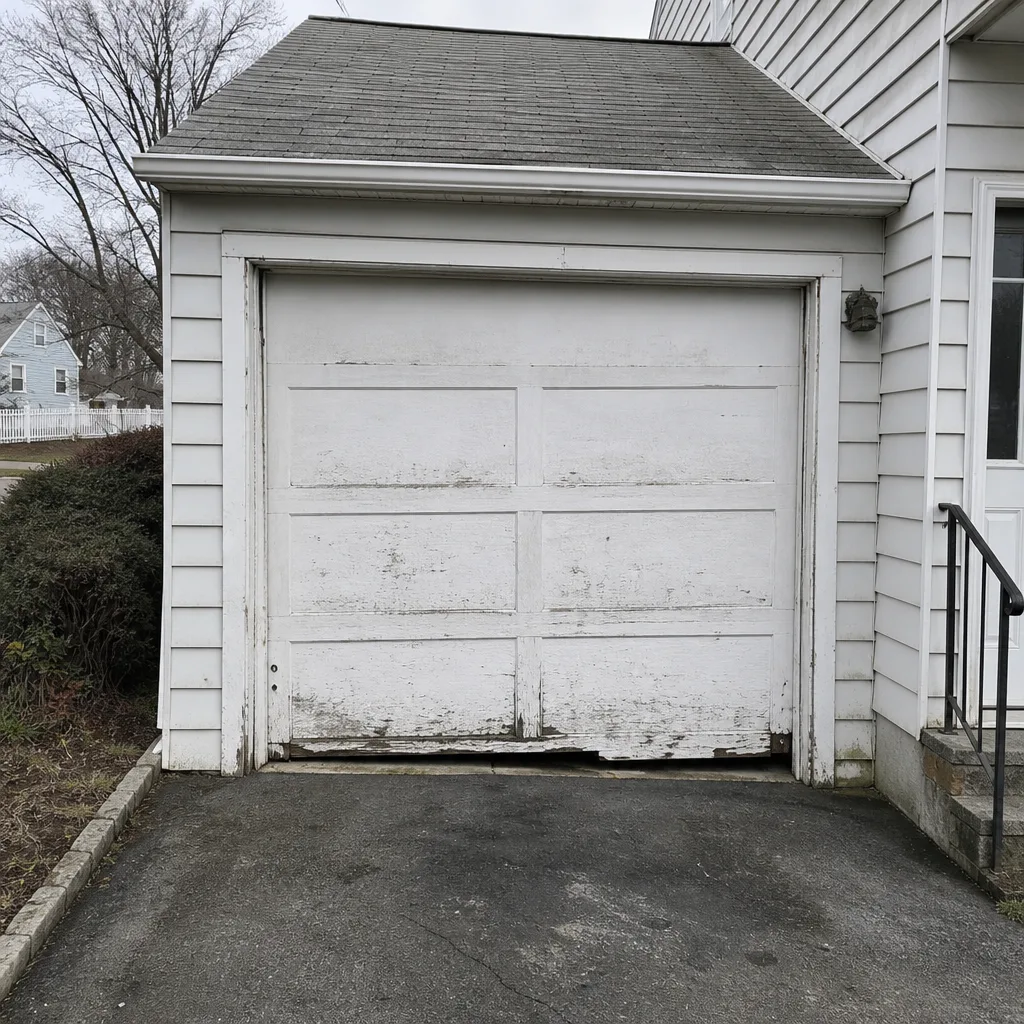 Before
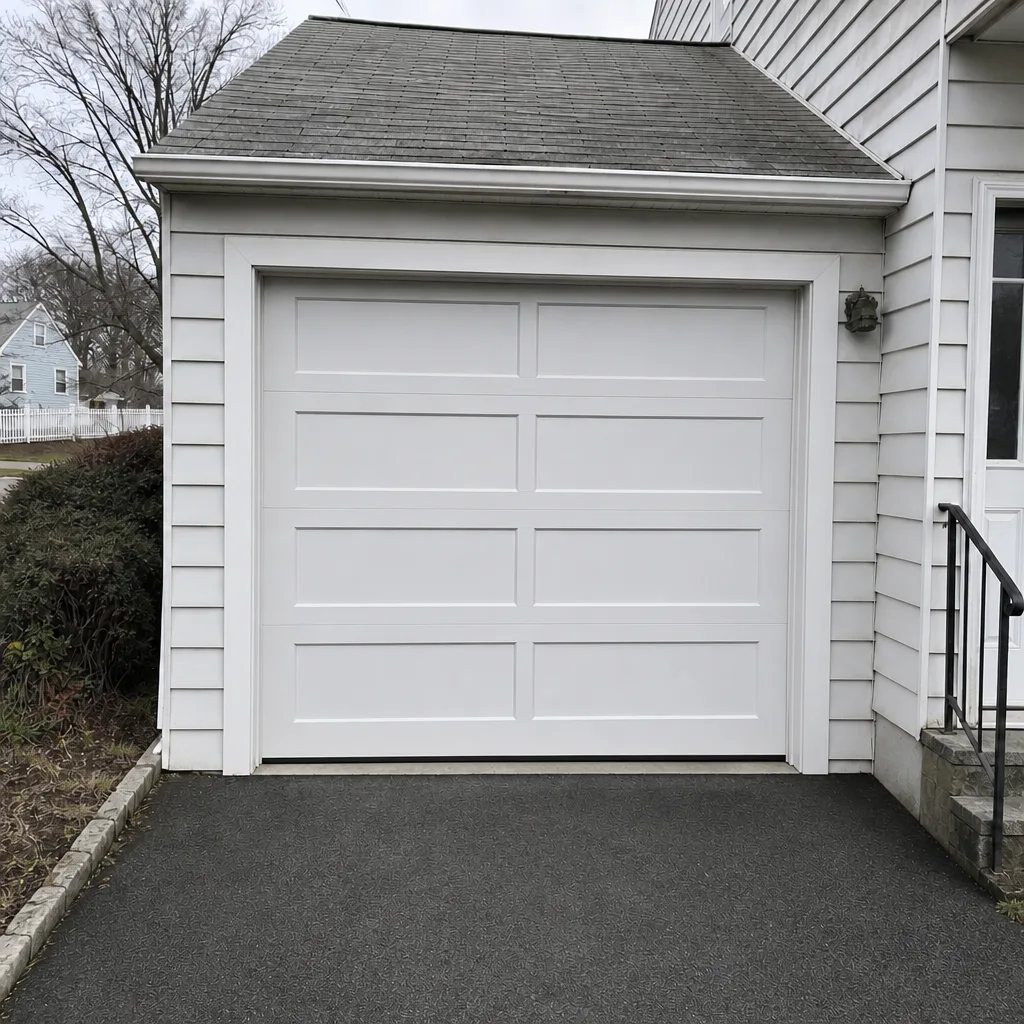 After
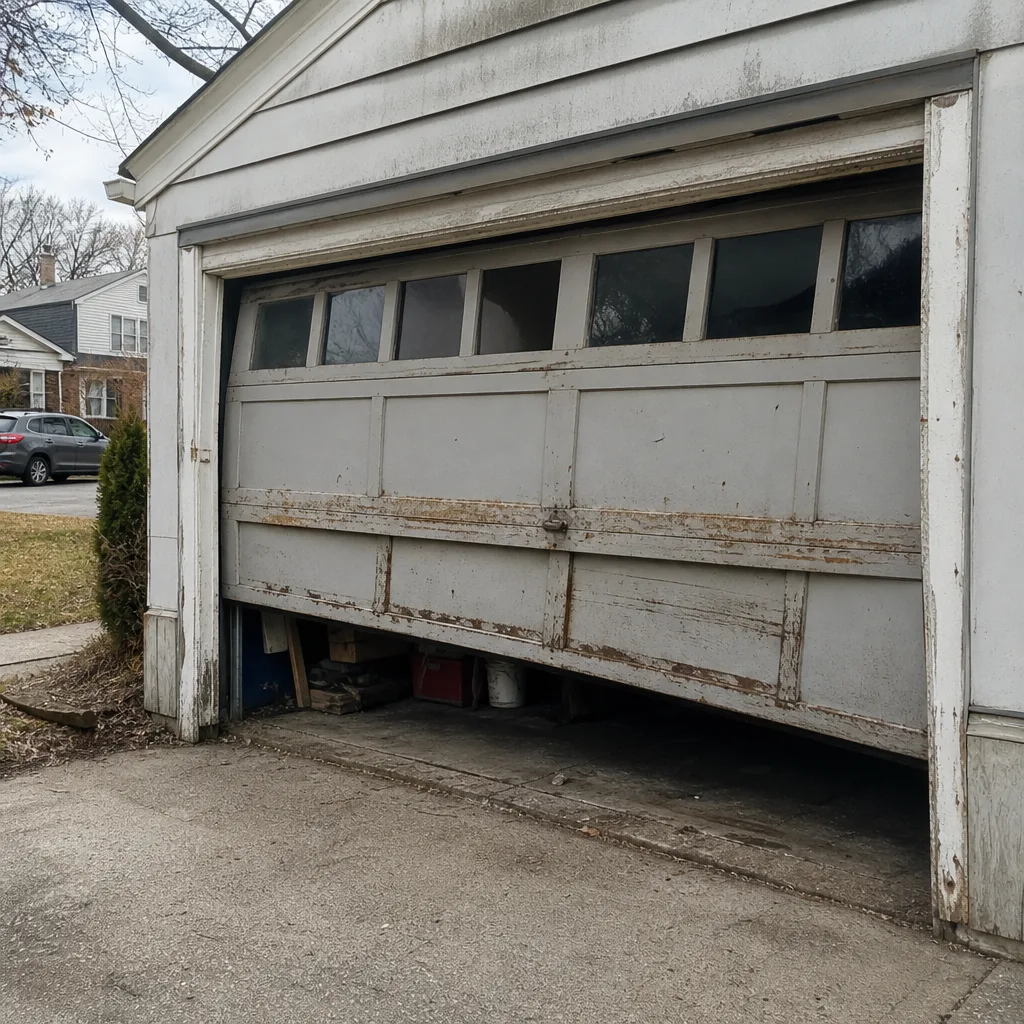 Before
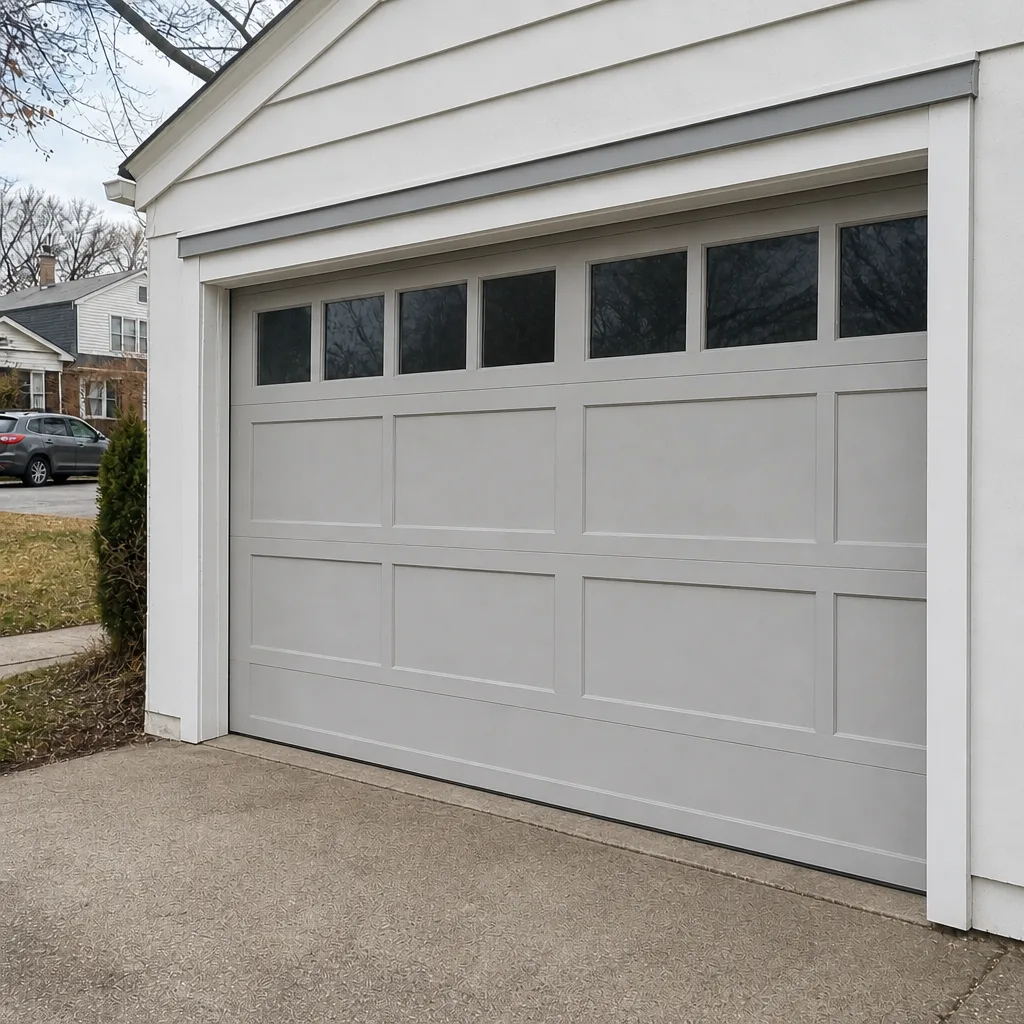 After
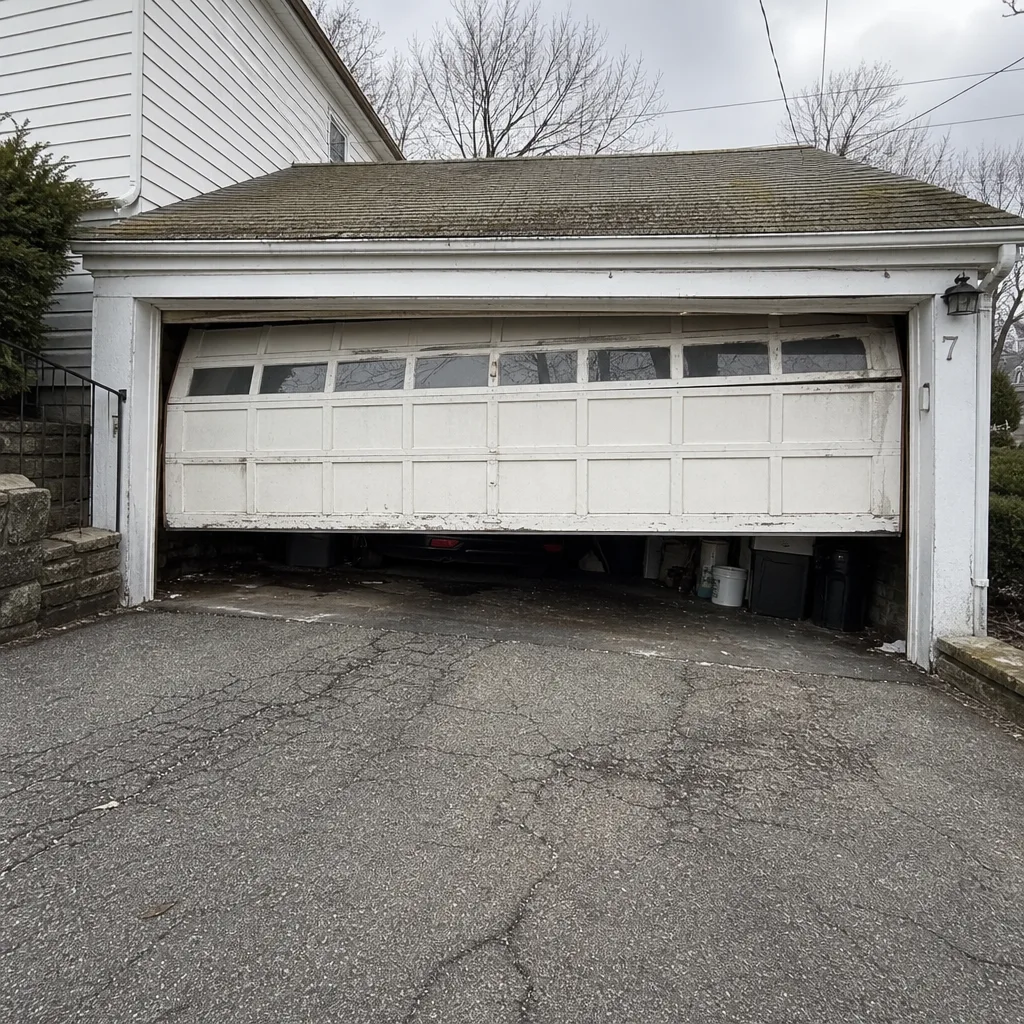 Before
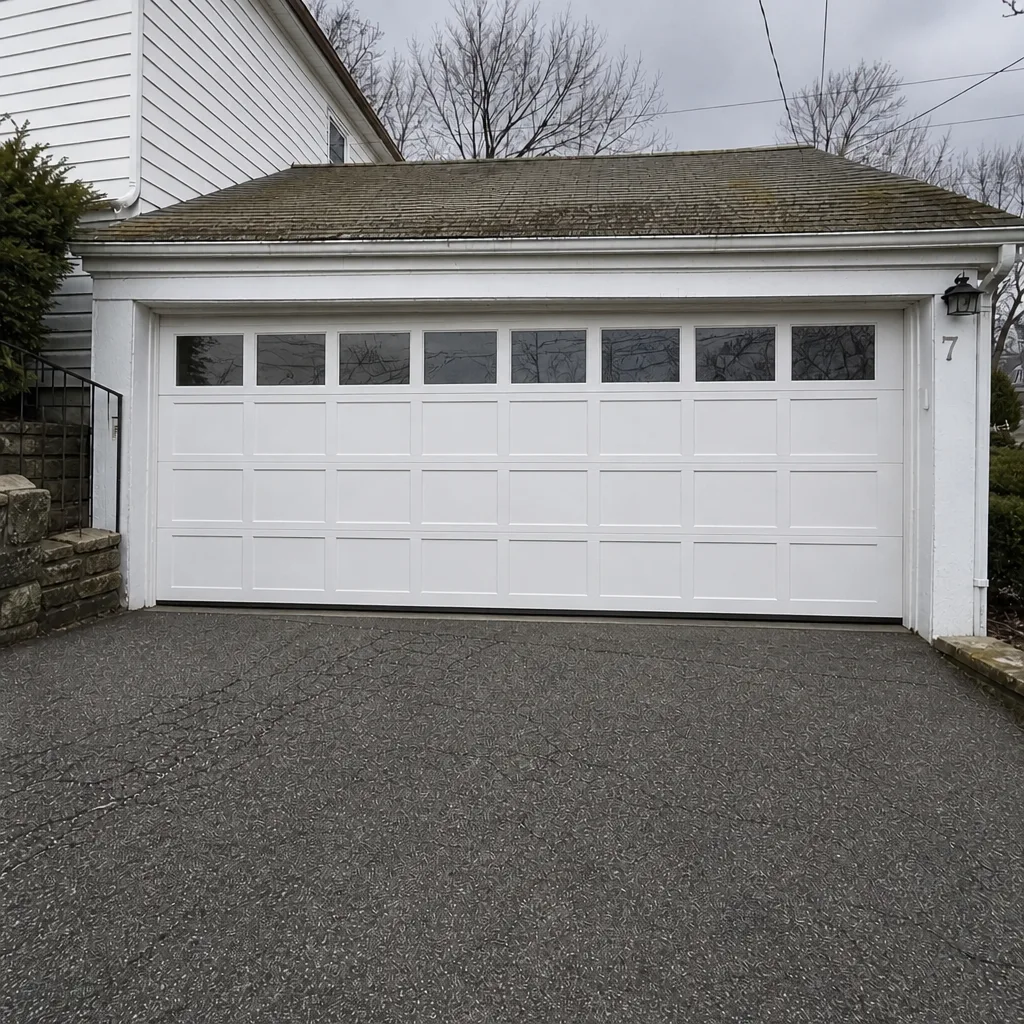 After
When to Call a Professional
Call a professional if the work touches the spring system, the cables, the door’s balance, or the opener’s installation and safety settings. Call if the door is off its tracks. Call if a garage door repair you tried has left the door heavier, crooked, or refusing to close. Call if a spring has snapped and the door is unusable. Call if you’re not sure whether the job is safe, because that’s a decision worth making with someone who sees these doors every day.
Garage Door Repair White Plains offers free estimates in White Plains. Our technicians have up to 11 years of experience, and we work on your brand: LiftMaster, Chamberlain, Genie, Clopay, Amarr, Wayne Dalton, Craftsman, and Raynor. Call (844) 484-7501. We answer 24/7. Fast dispatch from 7am to 7pm, Sunday through Friday. The estimate is free, and the price is set per job by the written estimate and agreed before any work starts.
Frequently Asked Questions
You should not. Torsion and extension springs store enough energy to cause serious injury in under a second if the door isn’t in the right position or the wrong tool slips. This isn’t a skill issue. Even careful homeowners get hurt on this job. Call (844) 484-7501 for a free estimate. Estimates are free and the price is set by the written estimate before work begins.
Weatherstripping, lubrication, cleaning, painting, and pairing a smart remote or opener are genuinely safe for a careful homeowner. These jobs don’t touch the door’s stored energy. Anything on the mechanism itself, meaning springs, cables, tracks, balance, or opener installation, is where DIY stops being a good deal.
Usually only if the work causes the failure. Manufacturer warranties typically cover defects in materials and workmanship and exclude damage from improper installation or repair. Routine maintenance and cosmetic work don’t void anything. Read your actual warranty, because the language is more specific than most DIY advice suggests. If you’re unsure what falls under it, call (844) 484-7501 and we’ll walk through it.
Because it stores energy. A torsion spring is twisted along the shaft above the door, and releasing that tension without the door properly positioned can be instant. Extension springs stretch along the sides. Either way, the danger doesn’t scale down with experience or caution. This is the reason spring work is a professional job even for a confident do-it-yourselfer.
You can, but the safety reverse has to be tested and set correctly, and the mounting has to match the door’s weight and travel. A Genie or Chamberlain opener that isn’t dialed in can reverse on the wrong cycle or fail to reverse at all. If you’re going to try it, read the manual for your specific model first and test the reverse feature before you trust it.
Yes, in most cases. We offer same-day service when we can, and emergency garage door service is available. Call (844) 484-7501 for an appointment. We answer 24/7. Fast dispatch from 7am to 7pm, Sunday through Friday. The price is set by the written estimate before any work starts, so there’s no surprise invoice after the fact.
The Bottom Line
The DIY question for a garage door is about risk, not ability. Low-risk jobs like weatherstripping, lubrication, painting, and smart opener pairing are worth doing yourself and save money over time. Springs, cables, track resets, and opener installation carry asymmetric risk where a mistake costs more than the savings, and no amount of careful preparation changes that. If you’re in White Plains and your door is one of the jobs on the danger list, the right move is a call. Its spring repair and opener service cover the work that shouldn’t be DIY, so you never need a second company for a related garage door issue. Call (844) 484-7501 for a free estimate and a written price before any work begins.
Written by the team at Garage Door Repair White Plains.